Tag: news

  • Tesla’s 2026 Summer Update: what actually changes in your car.

    Tesla’s 2026 Summer Update: what actually changes in your car.

    Tesla is rolling out its 2026 Summer Update, software build 2026.26, with the biggest changes centered on the in-car Grok voice assistant and navigation. The update is rolling out in waves and is expected to reach most vehicles by the end of July 2026, according to Not a Tesla App, which tracks official release notes.

    Grok, the AI assistant Tesla introduced in 2025 as a chat feature, now handles real vehicle controls. You can ask it to place phone calls, search for and play specific songs, adjust the cabin temperature, or open the glovebox, all by voice, in addition to the navigation requests it already supported. Tesla says Grok is also expanding beyond the US, with Europe and parts of Asia next in line.

    Navigation gets smarter, too. Automatic Navigation already routed you home, to work, or to calendar events. With this update, it learns other places you go regularly, like a school drop-off on the way to work, and starts suggesting routes to them without you typing an address. It also starts favoring roads you’ve actually driven before over whatever route is technically fastest.

    What else is in the update

    • Self-driving stats in the app. If your car has FSD, a new section in the Tesla app shows your usage statistics, with an option to share them.
    • Vehicle wrap uploads. Owners with supported vehicles can upload a custom wrap design directly from the Tesla app instead of transferring files by USB.
    • Caraoke scoring. The in-car Caraoke feature now scores your performance while parked and saves high scores to your driver profile.
    • Supercharger search by name and the ability to add Apple Music tracks to your queue.

    None of this requires you to do anything. Updates install over the air, and Tesla typically notifies you in the app and on the car’s touchscreen when 2026.26 is ready to install on your specific vehicle. If you want to check now, look under Software in your car’s touchscreen settings, or the Software Update section of the Tesla app.

    As with past over-the-air updates, exact rollout timing varies by region, hardware, and vehicle configuration, so don’t be surprised if a neighbor with the same model gets it a few days before or after you do.

    Photo by Andrey Matveev.
  • NTSB releases preliminary report on fatal Katy, Texas Tesla crash

    NTSB releases preliminary report on fatal Katy, Texas Tesla crash

    The National Transportation Safety Board has released a preliminary report on a fatal crash involving a Tesla Model 3 in Katy, Texas, and the findings center on how the vehicle’s Full Self-Driving (Supervised) system was being used in the moments before impact.

    According to the NTSB’s investigation summary, the crash occurred on June 19, 2026, on Rose Hollow Lane, a residential street with a 30 mph speed limit. A 2025 Tesla Model 3, occupied only by its driver, left the roadway, partially entered a driveway, and struck a house, causing one fatality. The NTSB states that electronic data recovered from the vehicle showed the driver “manually overrode FSD (Supervised) by pressing the accelerator pedal to 100%,” and that the car’s speed exceeded 70 mph at the time of the crash.

    The agency’s report is explicitly preliminary. Under NTSB procedure, a preliminary report lists the facts gathered so far without assigning cause; that determination comes only in a later final report, which can take a year or more to complete. The NTSB says all aspects of this crash remain under review as the investigation continues. Separately, the National Highway Traffic Safety Administration has opened its own review of the incident, according to CNBC, as part of the agency’s ongoing oversight of Tesla’s driver-assistance systems.

    For current owners, the report itself is narrow: it describes a data point about accelerator-pedal input, not a finding about how FSD (Supervised) performed as a system. Tesla classifies FSD (Supervised) as a driver-assistance feature, not an autonomous one, and its own documentation states the driver must remain attentive and ready to control the vehicle at all times. The NTSB investigation is still open, and the agency has said its final report — including any probable-cause determination and safety recommendations — will follow at a later date.

    Photo by I’m Zion.

  • Tesla is running a free Supercharging contest through the end of 2026.

    Tesla is running a free Supercharging contest through the end of 2026.

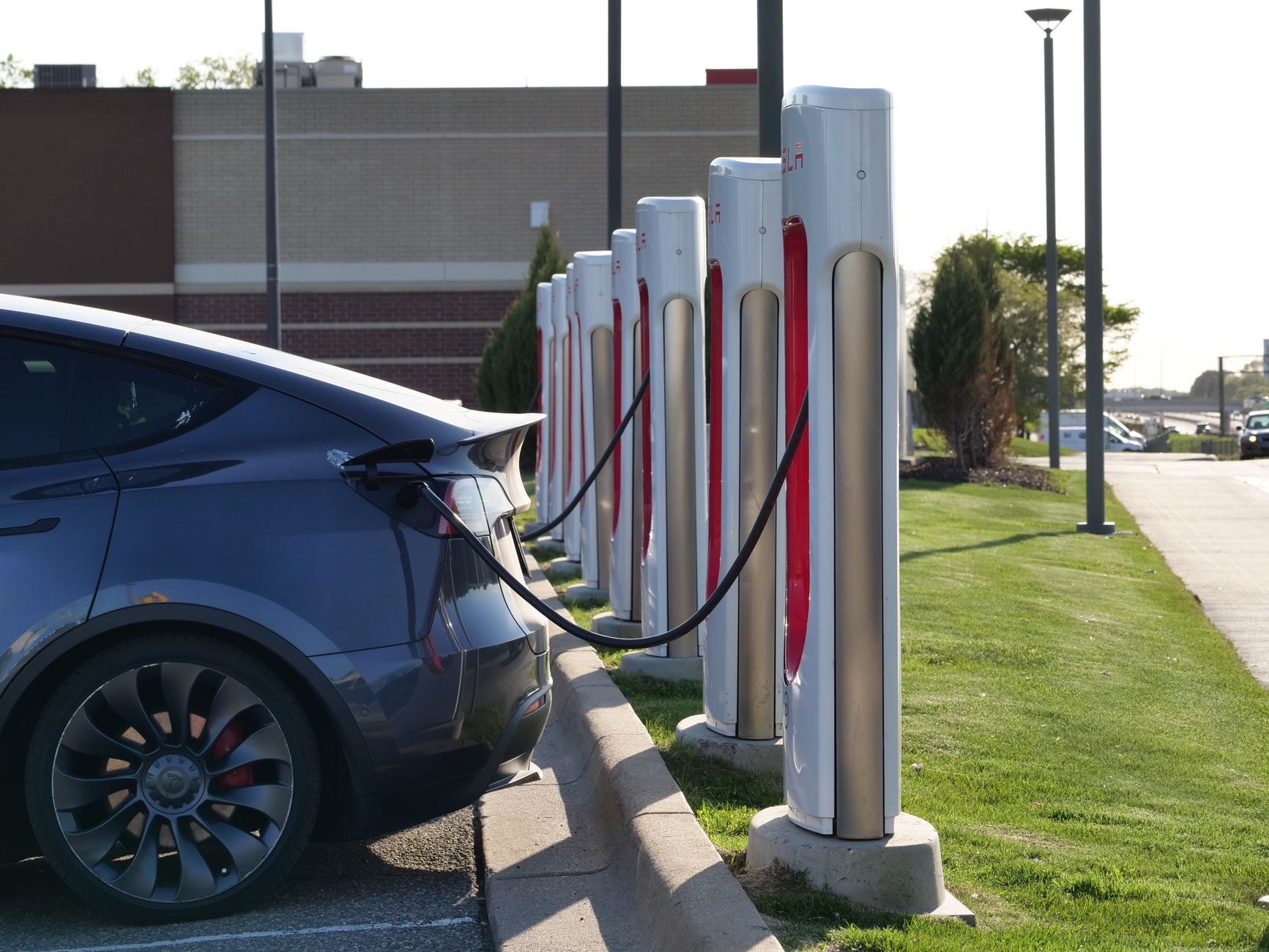
    Tesla is running a yearlong contest that rewards its heaviest Supercharger users with free charging for as long as they own their car, according to Tesla’s official contest page. Nine drivers will win: three from the Americas, three from Asia-Pacific and Oceania (excluding China), and three from Europe, the Middle East and Africa.

    Each region awards one winner in three categories. “Longest Trip” goes to the driver with the longest streak of visits to unique Supercharger locations, where a new stop within 24 hours of the last one extends the streak. “Most Unique Sites” goes to whoever visits the most different Supercharging locations over the year. “Most Energy” goes to the driver who charges the most total kilowatt-hours at Superchargers. Repeat visits to the same site are allowed but don’t extend a streak, per Tesla.

    The competition runs the full 2026 calendar year, from January 1 through December 31, so it’s already more than half over — but there’s still time to build a streak or add kilowatt-hours for the second half. Winners are notified in January 2027, and free Supercharging is applied to winning accounts before March 1, 2027, according to Tesla.

    Not everyone qualifies. Tesla excludes vehicles that already have free Supercharging, cars used commercially for ride-share or delivery, Tesla employees and their families, and drivers outside the three competition regions. Your region is assigned based on where most of your 2026 charging actually happens, not where you live.

    To participate, make sure your Tesla app is on its latest version and that “Share Charging Data with Tesla App” is turned on in your car’s settings — Tesla uses that data to track standing. You’ll also need to enroll through the 2026 Passport feature in the app before January 1, 2027. There’s no purchase or extra payment required beyond your normal charging costs, and Tesla calculates final standing from your last charging visit before the new year.

    InsideEVs reported on the contest in June, noting Tesla operates roughly 3,000 Supercharger locations in the U.S. alone — part of a global network Tesla says has grown past 80,000 Superchargers worldwide, giving contestants plenty of ground to cover.

    Checking your standing costs nothing: open the Tesla app, find the Passport or charging badges section, and see where you land. For most owners this won’t change day-to-day driving, but if you’re already logging serious road-trip miles, it’s a free entry into a contest you might already be winning.

    Photo by Giant Asparagus.

    Photo by Giant Asparagus.

  • Tesla issues two recalls this month. Here’s what owners need to do.

    Tesla issues two recalls this month. Here’s what owners need to do.

    Tesla has two open recalls this month, and owners of affected vehicles will start receiving notification letters in the mail. One requires nothing from you. The other requires a service appointment.

    Rearview camera delay (218,868 vehicles)

    Tesla told the National Highway Traffic Safety Administration that a software condition on certain 2017 and 2021–2023 Model 3, 2020–2023 Model Y, and 2021–2023 Model S and Model X vehicles could delay the rearview camera image by up to 11 seconds after shifting into reverse — a violation of the federal rear-visibility standard. The affected cars were running firmware 2026.8.6.

    The good news: Tesla caught this internally and began pushing a fix over the air on April 11, 2026, well before the formal recall filing. By the time the recall was filed, more than 99.92% of affected vehicles had already installed firmware 2026.8.6.1 or later, which resolves the delay. If your car has that update or a newer one, no action is needed. You can confirm your software version under Controls > Software on the touchscreen. Notification letters for this recall started going out in the mail after July 3, 2026.

    Missing certification label (14,575 Model Ys)

    The second recall is narrower but requires a trip to service. Tesla told NHTSA that an automated scanner at the factory failed to verify that a required certification label — the sticker listing your car’s maximum loaded weight, tire specs, and manufacture date, required under 49 CFR Part 567 — had actually been applied. Tesla estimates about 45% of the affected cars are genuinely missing the label. Without it, an owner has no easy way to know the vehicle’s rated weight limits, which raises the risk of unknowingly overloading the car.

    This one covers Model Y vehicles built November 17, 2024 through February 24, 2025 (model year 2025), and February 25, 2025 through April 21, 2026 (model year 2026). If your Model Y falls in that window, Tesla says you need to schedule a service appointment through the Tesla app: go to Service > Request Service > Other > Something Else, and type “Open Recall Repair – Certification Label” in the description. A technician checks for the label and applies one if it’s missing, at no cost, in under 10 minutes. Notification letters for this recall begin mailing July 17, 2026.

    How to check your own car

    You don’t have to wait for a letter. Enter your VIN into NHTSA’s recall search or Tesla’s own VIN lookup tool to see whether either campaign applies to your vehicle. Neither recall has been linked to any reported crash or injury.

    Photo by Gustavo Fring.

  • California’s new EV incentive exempts Rivian and Lucid from a price cap that applies to Tesla

    California’s new EV incentive exempts Rivian and Lucid from a price cap that applies to Tesla

    California has enacted a new state EV purchase incentive that exempts only “California-headquartered” automakers from a $50,000 price cap, a carve-out that benefits Rivian and Lucid but not Tesla, which moved its headquarters to Austin, Texas, in 2021. The provision was first reported by Teslarati and is confirmed in the text of Senate Bill 168, which passed the California Legislature on June 29, 2026.

    How the incentive works

    SB 168 directs the California Air Resources Board (CARB) to run a new incentive program for first-time zero-emission-vehicle buyers, funded through the 2026-27 state budget that Governor Gavin Newsom signed in June. Under the bill’s text, new vehicles must carry a manufacturer’s suggested retail price of $50,000 or less, and used vehicles must sell for $25,000 or less, to qualify. CARB sets the actual incentive amount, which manufacturers are required to match; NBC Los Angeles reports the current figures are $3,500 off a new EV and $1,750 off a used one, applied as an instant discount at the point of sale rather than a rebate claimed later. Buyers must certify they have never previously owned or leased an EV.

    The headquarters exemption

    The bill text creates one exception to the price caps: “incentives under the program shall be provided to California-headquartered zero-emission vehicle companies regardless of the vehicle manufacturer’s suggested retail price or sales price.” A qualifying company is defined as one headquartered in California as of January 1, 2026, whose entire vehicle lineup is zero-emission. InsideEVs confirms that Rivian, headquartered in Irvine, and Lucid, headquartered in the San Francisco Bay Area, both meet that definition, allowing their vehicles to qualify for the incentive regardless of price. Tesla, which relocated its corporate headquarters to Austin in 2021 while continuing to manufacture vehicles at its Fremont, California factory, does not meet the headquarters test and is therefore subject to the standard price caps like any other automaker.

    What it means for Tesla buyers

    Tesla is not barred from the program. Its vehicles are eligible on the same terms as any non-exempt automaker’s: if the MSRP is at or under $50,000, the vehicle can qualify for the incentive, subject to the buyer meeting the first-time-EV-buyer requirement and other program terms CARB is still finalizing. Current Model 3 and lower-trim Model Y configurations fall under that threshold, while pricier configurations do not. Edmunds lists the Model Y RWD starting at $39,990 and the Long Range/Premium trim at $46,380, both under the cap, while the Model Y Performance trim, at $58,880, exceeds it and would not qualify. By contrast, Rivian and Lucid models qualify for the incentive at any price under the headquarters exemption, including Lucid’s Air and Gravity, which start well above $50,000.

    As of early July 2026, the incentive program had not formally launched. CARB is still finalizing the grant agreements with automakers and dealerships required under SB 168 before buyers can claim the discount at the point of sale.

    Photo by Luke Miller.