Category: News

  • Tesla now sells an $80 adapter that turns your Model Y Premium into a power outlet

    Tesla now sells an $80 adapter that turns your Model Y Premium into a power outlet

    Tesla has started selling an $80 accessory that turns some Model Y Premium vehicles into a portable power source, according to Electrek’s reporting on August 15, 2026.

    What the adapter does

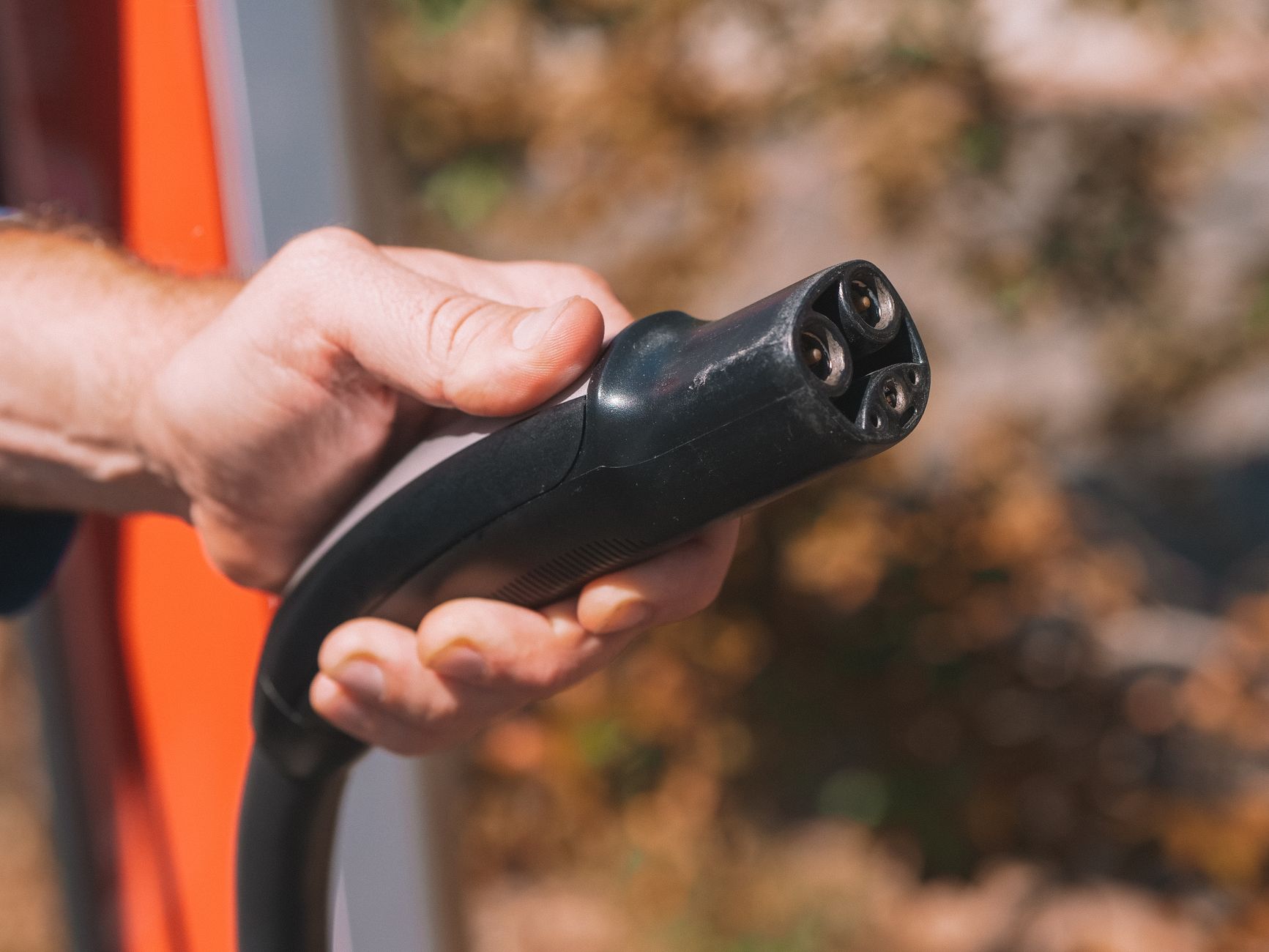
    The V2L (vehicle-to-load) Outlet Adapter clips onto the end of Tesla’s Gen 3 Mobile Connector cable. Plug the connector into the car’s charge port, clip on the adapter, and it exposes two household-style outlets that draw from the car’s battery. Tesla rates it at 2.4 kW, delivered at 120 volts and up to 20 amps — enough for power tools, small appliances, or camping gear, per Not a Tesla App.

    Not every Model Y Premium qualifies

    The adapter only works on vehicles built with hardware that supports two-way power flow through the charge port, and Tesla hasn’t published a clean cutoff date. Not a Tesla App reports that owners of cars built as recently as June 2026 are seeing mixed results, suggesting Tesla changed the underlying part around that time. Electrek adds that Model Y Performance and Cybertruck already support the feature, while the Model Y Standard and every current Model 3 do not — so this is a staged rollout tied to specific hardware, not a universal feature update.

    Tesla checks eligibility by VIN at the point of purchase. The most reliable way to find out if your car qualifies is to open the Tesla Shop inside the Tesla app, search for the outlet adapter, and see whether it’s offered for your vehicle — Tesla won’t let you buy it otherwise.

    How to get it

    The adapter is available now for $80 through the Tesla Shop, or as an add-on when configuring a new Model Y Premium, in the US and Puerto Rico.

    Tesla is still behind some competitors on V2L output: Hyundai’s Ioniq 5 has offered 3.6 kW since 2021, and Ford’s F-150 Lightning can reach 9.6 kW. Whole-home backup power (Powershare) remains exclusive to Cybertruck.

    Photo by Kindel Media.
  • Tesla files plans for a $10.1 billion solar factory in Texas.

    Tesla files plans for a $10.1 billion solar factory in Texas.

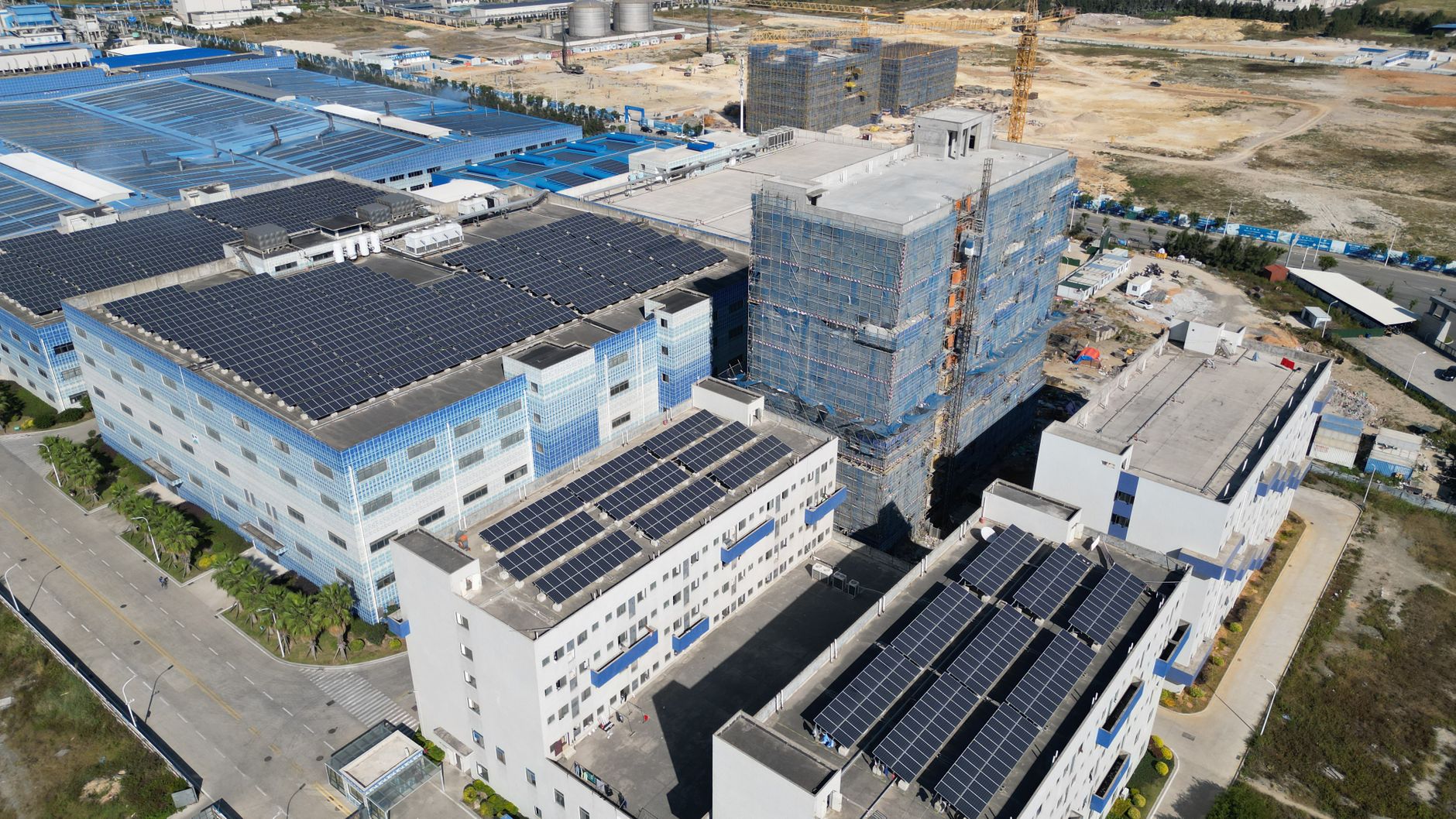
    Tesla has filed plans for a $10.1 billion solar manufacturing plant in Fort Bend County, Texas, according to Electrek’s review of the state filing. The project, internally named “Project Crystal Sun,” would sit on roughly 3,050 acres near Richmond, just outside Houston.

    What the filing describes

    Unlike most U.S. solar manufacturing today, which assembles modules from cells imported from Asia, the plant would handle production start to finish: ingot manufacturing, wafer manufacturing, coating, metallization and printing lines, cell testing, and cleanrooms, per Electrek’s reporting. Tesla filed for a Texas state tax incentive tied to the project, a standard step for a facility this size, according to pv magazine USA. Construction is planned for 2026 through 2028, with commercial production targeted for the first quarter of 2029. The filing estimates 9,712 permanent jobs at full buildout.

    Why it matters if you own a Tesla

    Tesla’s business isn’t only cars. Its Energy division sells the Powerwall home battery and Solar Roof, and plenty of Tesla owners pair one of those with home charging. A domestic, vertically integrated cell plant would let Tesla source solar cells for those products without relying on imports — but the filing doesn’t specify pricing, output targets, or which products the cells would supply, and commercial production is still roughly three years out.

    Worth keeping in perspective

    A state filing is not a groundbreaking. It’s an early, if serious, step: Tesla has revised or delayed large projects before, and permitting, financing, and construction all have to happen before Project Crystal Sun produces anything. Treat this as a plan to watch, not a done deal.

    Photo: Nova lv via Pexels.

    Photo by Nova lv.

  • Tesla’s new Stuck Assist mode is here. Here’s whether your Model 3 has it.

    Tesla’s new Stuck Assist mode is here. Here’s whether your Model 3 has it.

    Tesla’s 2026.26 Summer Update added a feature owners have been asking for since the refreshed Model Y and Cybertruck got it: a traction control mode you can actually choose, instead of one system trying to guess what you need. The new setting lives at Controls > Dynamics > Traction Control Mode, according to Tesla’s official release notes, and it offers three options.

    Auto is the default and resets at the start of every drive. It continuously reads the driving surface and adjusts traction control on its own, which is what every Tesla has done until now. Slippery Surface is built for ice or wet roads and spreads traction evenly across all four tires to keep the car stable. Stuck Assist is the new one everyone’s talking about: it’s meant for snow, mud, or sand, and it deliberately lets the wheels spin more than usual so you can rock the car free, per Tesla’s owner’s manual page on traction control.

    Here’s the catch: this specific software release brought the three-mode selector to the new (2024+) Model 3 specifically. The refreshed Model Y and Cybertruck already had similar traction modes from earlier updates, and Model S and Model X have had selectable modes for a while, according to The Weekly Driver’s coverage of the rollout. If you have an older, pre-refresh Model 3, Tesla hasn’t confirmed whether or when it’s coming.

    Don’t assume your car has it yet, either way. Like every Tesla software release, 2026.26 is rolling out in waves — The Weekly Driver reports it started reaching cars in late July 2026 and is still spreading gradually several weeks later, so delivery timing varies by vehicle. The only way to know for sure is to check Controls > Dynamics yourself after your car updates. If the option isn’t there yet, your car isn’t broken — it just hasn’t gotten its turn.

    For most owners, this won’t come up often. But if you’ve ever spun your wheels trying to get out of a snowy driveway or a soft shoulder after pulling over, Stuck Assist is built for exactly that moment, and it’s worth knowing where to find it before you need it.

    Photo by Wallace Silva.

  • Grok can now make calls and open your glovebox. Here’s whether your Tesla has it.

    Grok can now make calls and open your glovebox. Here’s whether your Tesla has it.

    Tesla’s Grok voice assistant can now do a lot more inside the car than answer questions. As part of the 2026 Summer Update (software version 2026.26), Tesla expanded Grok to place phone calls, search for and play music, adjust the climate system, open the glovebox, and navigate through the Settings menu, in addition to the navigation commands it already handled — according to Tesla’s own support page and confirmed by Not a Tesla App’s breakdown of the update.

    You can reach Grok three ways: tap the App Launcher and select Grok, press and hold the steering wheel’s voice button, or say “Hey Grok” once you’ve turned on that wake word under Controls > Audio > Grok Settings.

    The catch is that not every Tesla can use the expanded version, and it isn’t just about which software version you’re on. Tesla’s support page states Grok requires an AMD processor and vehicle software 2025.26 or later. Not a Tesla App’s reporting is more specific: the vehicle-command features are limited to cars with AMD Ryzen infotainment processors, and are not available on cars still running the older Intel Atom chip — regardless of software version. Tesla switched from Intel to AMD Ryzen in new production starting in late 2021, with the transition largely complete by the second half of 2022, so which chip you have generally comes down to when your car was built.

    To check which one you have, go to Controls > Software > Additional Vehicle Information and look for “Infotainment processor.” It’ll list either Intel Atom or AMD Ryzen. If you see Intel Atom, Grok still works for basic questions and navigation, but you won’t get the phone-call, music, climate, or glovebox commands from this update — and Tesla hasn’t given a timeline for whether or when that will change. You’ll also need an active Premium Connectivity subscription or a stable Wi-Fi connection either way, since Grok doesn’t run without a data connection.

    One more thing worth knowing if you’re outside North America: Tesla has also been widening where Grok’s wake word and vehicle commands work at all, expanding into more of Europe and parts of Asia alongside this update. As with any staged Tesla rollout, treat this as a feature that’s arriving in waves by hardware and region rather than something every owner gets on the same day — if you don’t have it yet on a qualifying car, an upcoming software update is the most likely path to get it, not something you can force today.

    Photo by Shuaizhi Tian.

  • Tesla burned through its California EV rebate money in five days.

    Tesla burned through its California EV rebate money in five days.

    California opened a new $3,500 rebate for first-time EV buyers on August 3, 2026. By August 8, Tesla’s share of the money was gone — used up in five days, with half of it claimed in the first three, according to Electrek and InsideEVs.

    The program, called MyFirstEV, is separate from the federal EV tax credit, which stopped applying to vehicles acquired after September 30, 2025. California created a one-time $135.5 million state fund and had automakers match it dollar-for-dollar, bringing total available money to roughly $271 million spread across about 15 brands. First-time buyers or lessees get $3,500 off a new zero-emission vehicle priced at $50,000 or less, or $1,750 off a used one priced at $25,000 or less, applied instantly at the point of sale with no income cap.

    Tesla’s cut of that fund was always going to go fast. The brand accounted for roughly 56.7% of all zero-emission vehicles registered in California through June 2026, and the state’s per-automaker allocations weren’t sized to match that share evenly. Tesla’s slice worked out to an estimated $9 million in state money, doubled to about $18 million once its own matching contribution was included — a fraction of what a brand selling that many EVs in the state could plausibly move through in a week.

    If you were planning to use this rebate on a new Tesla, it isn’t available right now. As of this writing, the California Air Resources Board hasn’t said whether Tesla will get a second allocation or when one might open back up, so don’t count on it being live by the time you’re ready to buy. Other brands still had funds as of this month — Electrek’s reporting lists Hyundai, Genesis, and Lucid as still funded, with Ford, Chevy, and Kia rolling out allocations later in August and Toyota, Honda, and Subaru starting in September.

    Worth checking before you assume you’re out of luck entirely: state and utility incentives beyond MyFirstEV vary by where you live and often aren’t tied to Tesla’s allocation at all. If California reopens Tesla’s share, or another state program applies to you, the rules and dollar amounts can change quickly — confirm current status directly with Tesla or your state’s program before you factor a rebate into your budget.

    Photo by Erik Mclean.

  • Oregon’s EV rebate reopens August 25. Here’s what a Tesla buyer gets.

    Oregon’s EV rebate reopens August 25. Here’s what a Tesla buyer gets.

    Oregon’s Clean Vehicle Rebate Program reopens on August 25 and runs through November 4, 2026, according to the state’s Department of Environmental Quality. If you’re planning to buy or lease a Tesla in Oregon, the amount you get back depends on when you sign — and the rebate is smaller than it used to be.

    The Standard Rebate, open to most buyers regardless of income, now pays $2,000 on a new EV, down from $2,500 in prior rounds. Buyers who qualify for the income-based Charge Ahead Rebate — household income between $51,000 and $251,000 — can still get up to $7,500 on a new EV. Used EVs qualify for up to $4,000 or 30% of the purchase price, whichever is lower, also down from a flat $5,000 offered before.

    To qualify, the vehicle has to appear on Oregon DEQ’s approved list and carry an original base MSRP under $50,000. That keeps most Model 3 trims in range. Higher-priced Model Y configurations, and Model S or Model X, are likely to exceed the cap and fall outside the Standard Rebate — check your specific trim’s MSRP against DEQ’s eligible vehicle list before counting on it.

    Timing matters here in a way it doesn’t with a tax credit. The rebate applies only to vehicles purchased or leased between August 25 and November 4 — sign a week early or a week late, on either side of that window, and you get nothing. Oregon’s program has also run out of funding early in past years, so being in the window doesn’t guarantee a rebate; it depends on funds still being available when you apply. Income-eligible buyers can apply for Charge Ahead prequalification now, ahead of the reopening, which is worth doing if you think you’ll qualify.

    If you’re closing on a Tesla in Oregon in the next two weeks, this window won’t help you. If you can wait until August 25, applying promptly once the program reopens is the more reliable path, given the funding history.

    Photo by Kindel Media.

  • Tesla recalls 20,349 Model 3 and Model Y cars for headlights that shine too bright.

    Tesla recalls 20,349 Model 3 and Model Y cars for headlights that shine too bright.

    Tesla is physically recalling 20,349 vehicles in the United States because their low-beam headlights can shine brighter than federal rules allow. The company filed the report with the National Highway Traffic Safety Administration on August 4, 2026, in a campaign tracked as NHTSA recall 26V507.

    The recall covers 18,735 Model Y vehicles from model years 2020–2023 and 1,614 Model 3 vehicles from model years 2017–2023. What connects them isn’t the car’s age — it’s a specific part. Affected vehicles either left the factory with, or had a service visit install, a headlamp assembly from supplier Marelli Automotive Lighting carrying a manufacturing date of June 2, 2023, or later. In testing, those headlamps put out more light than allowed in the upper-left and upper-right corners of the federally defined low-beam pattern — bright enough, per InsideEVs’ reporting, to reduce visibility for oncoming drivers and raise crash risk, even though a driver behind the wheel likely wouldn’t notice anything different from inside the car.

    This isn’t a software fix. Tesla hasn’t finalized a remedy — the company hasn’t said publicly whether the repair will replace the headlamp assembly or re-aim it — but whatever it turns out to be will require a trip to a service center or a mobile service appointment, not an over-the-air update.

    Tesla plans to start mailing formal recall notices around September 15, 2026, though many owners are expected to see the notice inside the Tesla app before the letter arrives. If you own a 2017–2023 Model 3 or a 2020–2023 Model Y, the fastest way to check your specific car is to look up your VIN through NHTSA’s recall search or watch for a notification in the Tesla app under your vehicle’s alerts. This is a repair recall, not a stop-drive order — Tesla hasn’t asked owners to park the car in the meantime, only to expect a service visit once a fix is finalized.

    If your car doesn’t show up in the recall lookup, no action is needed. Because the affected headlamp assemblies were also used in some service replacements, a car outside the original 2017–2023 Model 3 or 2020–2023 Model Y range could still be included if it received a headlight repair after mid-2023 — VIN lookup, not model year alone, is the reliable check.

    Photo by Nicat Teymurov.

  • Illinois reopened its EV rebate for 2026. Here’s how a Tesla buyer qualifies.

    Illinois reopened its EV rebate for 2026. Here’s how a Tesla buyer qualifies.

    Illinois’ EV Rebate Program opened its newest application cycle on August 1, 2026, and stays open through December 31, 2026, according to the Illinois EPA. If you bought — or are about to buy — a new or used Tesla in Illinois, it’s worth checking before you assume the expired federal credit is the whole incentive picture for your state.

    The rebate pays $2,000 toward a new or used all-electric vehicle for most buyers, and $4,000 if your household income falls at or under 500% of the federal poverty line for the current state fiscal year — a threshold higher than it sounds, so it’s worth checking even if you don’t think of yourself as low-income. The vehicle’s selling price can’t exceed $80,000 before tax, which comfortably covers every Model 3 and Model Y configuration and most Model S and Model X trims, though a heavily optioned S or X can bump against that ceiling.

    A few conditions matter as much as the dollar amount. You can’t have received an Illinois EV rebate in the past 10 years. You have to keep the car for at least 12 consecutive months after purchase. And the application has to be postmarked during the open cycle and within 180 days of your purchase date — so if you bought your Tesla back in the spring, that 180-day window may already be running out even though the cycle just opened.

    Funding is finite: the Illinois EPA has $14 million appropriated for the program this fiscal year, covering both passenger EVs and electric motorcycles (which get a separate $1,500 rebate and don’t compete for the same pool as cars). In the prior cycle, the state approved 1,658 of 1,892 low-income applications and 1,343 of 1,607 standard applications — a rough sense of how far the money tends to go, though it’s not a guarantee for the current round.

    This rebate is separate from, and stackable with, whatever your utility offers on top of it. If you’re piecing together what a Tesla actually costs to own in Illinois this year, the state rebate is one of the few purchase incentives still standing now that the federal $7,500 tax credit has expired for vehicles acquired after September 30, 2025.

    Photo by Reinhard Bruckner.

  • Tesla ships FSD v14.3.7 with a rewritten AI compiler for faster reaction time.

    Tesla ships FSD v14.3.7 with a rewritten AI compiler for faster reaction time.

    Tesla has started rolling out software version 2026.21.5, which delivers Full Self-Driving (Supervised) v14.3.7 to Model 3, Model Y, Model S, Model X, and Cybertruck vehicles running Hardware 3 or Hardware 4. According to release notes tracked by Not a Tesla App, the update began reaching cars on August 1, 2026, separate from the broader 2026 Summer Update that shipped the same month.

    The headline change is under the hood. Tesla rewrote the AI compiler and runtime using MLIR, which the company says produces a 20% faster reaction time and speeds up how quickly new models can be trained and shipped. The update also upgrades the neural network’s vision encoder, which Tesla says improves understanding in rare and low-visibility scenarios and strengthens how the car reads traffic signs and 3D geometry.

    On the road, the release focuses on traffic light handling at complex intersections — compound lights, curved approaches, and stopping cleanly for yellow lights — along with reduced lane-biasing and tailgating behavior and more decisive parking-spot selection. Tesla also says the car responds better to emergency vehicles, school buses, and small animals near the road, and recovers automatically from temporary system hiccups without requiring driver intervention.

    A few other features round out the release. Actually Smart Summon is now available on Cybertruck, with its top speed raised to 8 mph. The in-car camera preview, which the July Summer Update added for use in Park, now also works while driving. And Tesla says it unified the underlying model across Smart Summon, FSD, and its Robotaxi service, aiming for more consistent behavior across all three.

    As with prior FSD releases, 2026.21.5 is rolling out gradually rather than to the whole fleet at once. Fleet-tracking site Teslascope shows installs concentrated on newer Hardware 4 vehicles in North America roughly a week and a half into the rollout, with older Hardware 3 cars — which are also eligible per Tesla’s release notes — following on a slower timeline. Owners can check whether the update has reached their car under Software on the vehicle’s touchscreen; Tesla’s in-app release notes remain the official source for exactly what shipped to a given car.

    Photo by Leonardo Gonzalez.

  • California will knock $3,500 off your first Tesla, while the funding lasts.

    California will knock $3,500 off your first Tesla, while the funding lasts.

    California is now handing first-time electric vehicle buyers an instant $3,500 discount on a new Tesla Model 3 or Model Y, through a state program called MyFirstEV. Unlike the old federal tax credit, you don’t file for it later. The discount comes off the price at the point of sale.

    The program comes from SB 168, signed by Governor Newsom in July, and is run by the California Air Resources Board. The state put up $135.5 million, and participating automakers, Tesla among them, match that dollar-for-dollar. That funds a $3,500 rebate on new zero-emission vehicles and a $1,750 rebate on qualifying used ones.

    What actually qualifies

    To get the new-vehicle rebate, you need to be a first-time ZEV buyer or lessee, and you sign an attestation confirming that. The vehicle’s base MSRP has to be $50,000 or under. That’s the important detail for Tesla shoppers: it’s the base model’s price that counts, not what you actually pay after options, so a Model 3 or Model Y with upgrades can still qualify as long as the entry trim is priced under the cap. According to InsideEVs, that currently limits Tesla’s participation to the Model 3 and Model Y, not Model S, Model X, or Cybertruck.

    Used EVs qualify for the smaller $1,750 rebate if the vehicle sells for $25,000 or less, is at least two model years old, and comes certified pre-owned from a franchised dealership. Plug-in hybrids don’t count; hydrogen fuel-cell vehicles do.

    Why the timing matters

    The program went live on August 3, 2026, and rollout dates vary by automaker. Teslarati reports that orders need to be placed on or after that date, with delivery completed while funds remain available. That last part is the catch: CARB is explicit that the rebate runs on a first-come, first-served basis until each automaker’s share of the money is gone, and each automaker’s allocation is separate. One brand running out doesn’t affect another’s.

    Nothing here guarantees Tesla’s allocation will still be funded by the time you’re ready to order. If you’re a first-time EV buyer in California weighing a Model 3 or Model Y, the practical move is to confirm the rebate is still showing at checkout on Tesla’s site or with your delivery advisor before you count on it, rather than assuming it’ll still be there once you’ve finished configuring.

    The rebate can also be combined with other CARB incentive programs, including the Driving Clean Assistance Program and Clean Cars 4 All, for buyers who qualify for those separately. It has no effect on federal incentives, since the federal EV tax credit itself no longer applies to vehicles acquired after September 30, 2025.

    Photo by Kindel Media.