Blog

  • Tesla burned through its California EV rebate money in five days.

    Tesla burned through its California EV rebate money in five days.

    California opened a new $3,500 rebate for first-time EV buyers on August 3, 2026. By August 8, Tesla’s share of the money was gone — used up in five days, with half of it claimed in the first three, according to Electrek and InsideEVs.

    The program, called MyFirstEV, is separate from the federal EV tax credit, which stopped applying to vehicles acquired after September 30, 2025. California created a one-time $135.5 million state fund and had automakers match it dollar-for-dollar, bringing total available money to roughly $271 million spread across about 15 brands. First-time buyers or lessees get $3,500 off a new zero-emission vehicle priced at $50,000 or less, or $1,750 off a used one priced at $25,000 or less, applied instantly at the point of sale with no income cap.

    Tesla’s cut of that fund was always going to go fast. The brand accounted for roughly 56.7% of all zero-emission vehicles registered in California through June 2026, and the state’s per-automaker allocations weren’t sized to match that share evenly. Tesla’s slice worked out to an estimated $9 million in state money, doubled to about $18 million once its own matching contribution was included — a fraction of what a brand selling that many EVs in the state could plausibly move through in a week.

    If you were planning to use this rebate on a new Tesla, it isn’t available right now. As of this writing, the California Air Resources Board hasn’t said whether Tesla will get a second allocation or when one might open back up, so don’t count on it being live by the time you’re ready to buy. Other brands still had funds as of this month — Electrek’s reporting lists Hyundai, Genesis, and Lucid as still funded, with Ford, Chevy, and Kia rolling out allocations later in August and Toyota, Honda, and Subaru starting in September.

    Worth checking before you assume you’re out of luck entirely: state and utility incentives beyond MyFirstEV vary by where you live and often aren’t tied to Tesla’s allocation at all. If California reopens Tesla’s share, or another state program applies to you, the rules and dollar amounts can change quickly — confirm current status directly with Tesla or your state’s program before you factor a rebate into your budget.

    Photo by Erik Mclean.
  • Do you still need PlugShare or ABRP if you have a Tesla?

    Do you still need PlugShare or ABRP if you have a Tesla?

    Tesla’s built-in navigation plans Supercharger stops automatically, so for years the answer to “do I need another charging app” was mostly no. That’s less true now. Tesla has retrofitted many Superchargers with a Magic Dock adapter that lets non-Tesla EVs charge there, and Tesla drivers increasingly cross onto non-Tesla networks on longer trips. In that mixed-network world, two free apps — PlugShare and A Better Route Planner (ABRP) — are worth having installed, even if you rarely open them.

    PlugShare is a map, not a router. It aggregates charging stations from every network — Superchargers, Electrify America, ChargePoint, EVgo — onto one map and lets you filter by connector type and network. Its most useful feature for a Tesla owner is the community check-in log: other drivers post in real time when a stall is broken, occupied, or blocked, which Tesla’s own in-car map doesn’t show. That matters most off Tesla’s own network, where uptime data is thinner.

    ABRP does what PlugShare doesn’t: it simulates your actual energy use — factoring in your exact car model, its charging curve, elevation changes, and weather — to plan a multi-stop route and estimate your charge level at each stop. Tesla’s in-car Trip Planner does this too, but mainly for Superchargers; ABRP will route you through non-Tesla stations as well, which matters if you’re headed somewhere Tesla’s network doesn’t reach, or you want a second opinion on charge times before committing to a route.

    For most day-to-day driving, neither app earns a place on your home screen — Tesla’s own Trip Planner handles routine Supercharger routing well, and opening PlugShare for a five-mile errand is overkill. Where they pay off is longer trips off the Supercharger network, or trips where a specific stop’s reliability matters more than Tesla’s default routing assumes. Load PlugShare before a trip to an area with fewer Superchargers, and consider ABRP if you’re mixing networks or driving a route Tesla’s planner doesn’t cover well.

    Both apps are free for the core mapping and route-planning features described here. PlugShare has no paid tier; ABRP offers an optional premium subscription for extras like live vehicle-battery connectivity and CarPlay/Android Auto display, but the free version is enough for occasional trip planning.

    Photo by Alicia Christin Gerald.

  • Oregon’s EV rebate reopens August 25. Here’s what a Tesla buyer gets.

    Oregon’s EV rebate reopens August 25. Here’s what a Tesla buyer gets.

    Oregon’s Clean Vehicle Rebate Program reopens on August 25 and runs through November 4, 2026, according to the state’s Department of Environmental Quality. If you’re planning to buy or lease a Tesla in Oregon, the amount you get back depends on when you sign — and the rebate is smaller than it used to be.

    The Standard Rebate, open to most buyers regardless of income, now pays $2,000 on a new EV, down from $2,500 in prior rounds. Buyers who qualify for the income-based Charge Ahead Rebate — household income between $51,000 and $251,000 — can still get up to $7,500 on a new EV. Used EVs qualify for up to $4,000 or 30% of the purchase price, whichever is lower, also down from a flat $5,000 offered before.

    To qualify, the vehicle has to appear on Oregon DEQ’s approved list and carry an original base MSRP under $50,000. That keeps most Model 3 trims in range. Higher-priced Model Y configurations, and Model S or Model X, are likely to exceed the cap and fall outside the Standard Rebate — check your specific trim’s MSRP against DEQ’s eligible vehicle list before counting on it.

    Timing matters here in a way it doesn’t with a tax credit. The rebate applies only to vehicles purchased or leased between August 25 and November 4 — sign a week early or a week late, on either side of that window, and you get nothing. Oregon’s program has also run out of funding early in past years, so being in the window doesn’t guarantee a rebate; it depends on funds still being available when you apply. Income-eligible buyers can apply for Charge Ahead prequalification now, ahead of the reopening, which is worth doing if you think you’ll qualify.

    If you’re closing on a Tesla in Oregon in the next two weeks, this window won’t help you. If you can wait until August 25, applying promptly once the program reopens is the more reliable path, given the funding history.

    Photo by Kindel Media.

  • Tesla recalls 20,349 Model 3 and Model Y cars for headlights that shine too bright.

    Tesla recalls 20,349 Model 3 and Model Y cars for headlights that shine too bright.

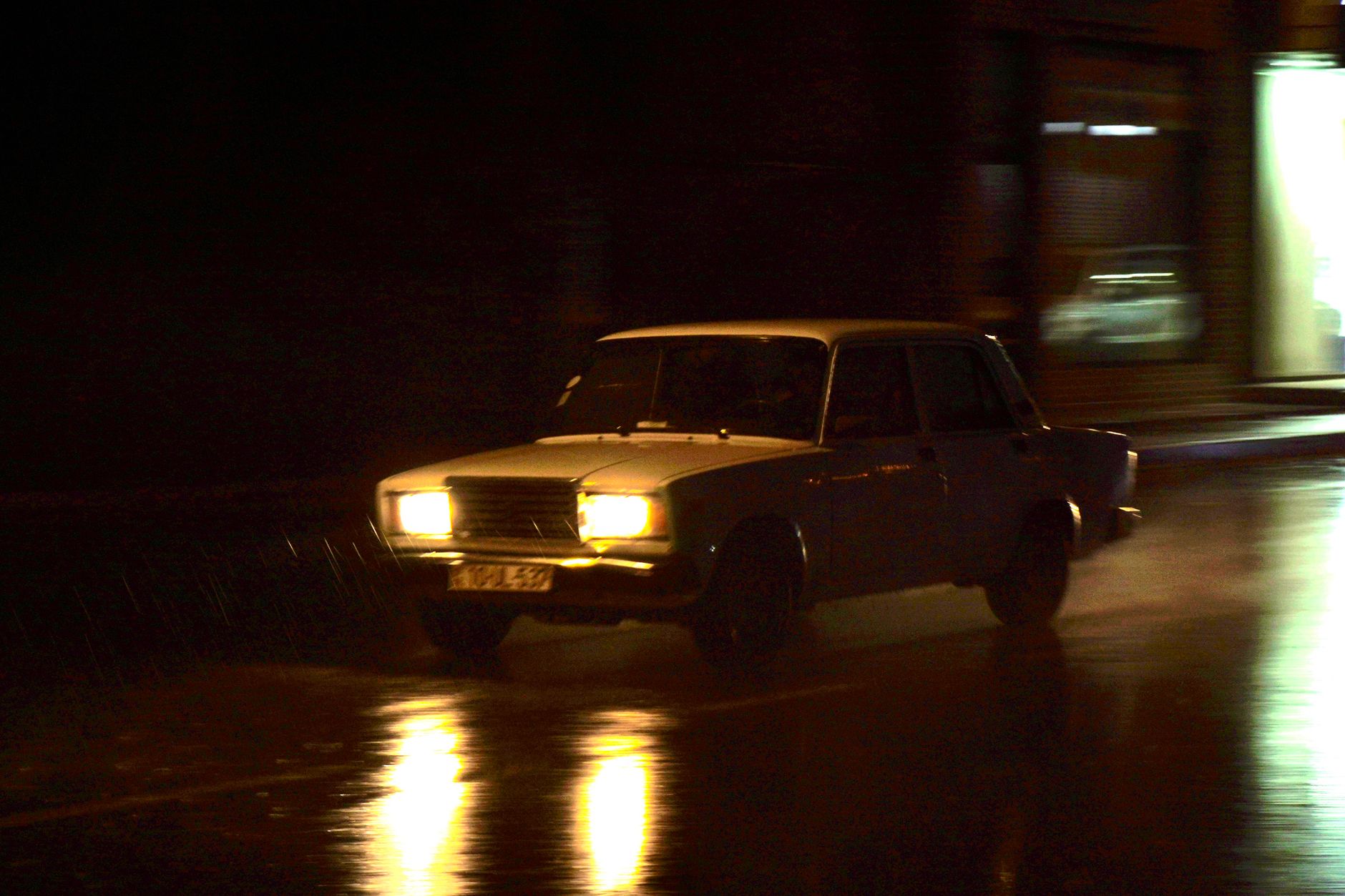
    Tesla is physically recalling 20,349 vehicles in the United States because their low-beam headlights can shine brighter than federal rules allow. The company filed the report with the National Highway Traffic Safety Administration on August 4, 2026, in a campaign tracked as NHTSA recall 26V507.

    The recall covers 18,735 Model Y vehicles from model years 2020–2023 and 1,614 Model 3 vehicles from model years 2017–2023. What connects them isn’t the car’s age — it’s a specific part. Affected vehicles either left the factory with, or had a service visit install, a headlamp assembly from supplier Marelli Automotive Lighting carrying a manufacturing date of June 2, 2023, or later. In testing, those headlamps put out more light than allowed in the upper-left and upper-right corners of the federally defined low-beam pattern — bright enough, per InsideEVs’ reporting, to reduce visibility for oncoming drivers and raise crash risk, even though a driver behind the wheel likely wouldn’t notice anything different from inside the car.

    This isn’t a software fix. Tesla hasn’t finalized a remedy — the company hasn’t said publicly whether the repair will replace the headlamp assembly or re-aim it — but whatever it turns out to be will require a trip to a service center or a mobile service appointment, not an over-the-air update.

    Tesla plans to start mailing formal recall notices around September 15, 2026, though many owners are expected to see the notice inside the Tesla app before the letter arrives. If you own a 2017–2023 Model 3 or a 2020–2023 Model Y, the fastest way to check your specific car is to look up your VIN through NHTSA’s recall search or watch for a notification in the Tesla app under your vehicle’s alerts. This is a repair recall, not a stop-drive order — Tesla hasn’t asked owners to park the car in the meantime, only to expect a service visit once a fix is finalized.

    If your car doesn’t show up in the recall lookup, no action is needed. Because the affected headlamp assemblies were also used in some service replacements, a car outside the original 2017–2023 Model 3 or 2020–2023 Model Y range could still be included if it received a headlight repair after mid-2023 — VIN lookup, not model year alone, is the reliable check.

    Photo by Nicat Teymurov.

  • Illinois reopened its EV rebate for 2026. Here’s how a Tesla buyer qualifies.

    Illinois reopened its EV rebate for 2026. Here’s how a Tesla buyer qualifies.

    Illinois’ EV Rebate Program opened its newest application cycle on August 1, 2026, and stays open through December 31, 2026, according to the Illinois EPA. If you bought — or are about to buy — a new or used Tesla in Illinois, it’s worth checking before you assume the expired federal credit is the whole incentive picture for your state.

    The rebate pays $2,000 toward a new or used all-electric vehicle for most buyers, and $4,000 if your household income falls at or under 500% of the federal poverty line for the current state fiscal year — a threshold higher than it sounds, so it’s worth checking even if you don’t think of yourself as low-income. The vehicle’s selling price can’t exceed $80,000 before tax, which comfortably covers every Model 3 and Model Y configuration and most Model S and Model X trims, though a heavily optioned S or X can bump against that ceiling.

    A few conditions matter as much as the dollar amount. You can’t have received an Illinois EV rebate in the past 10 years. You have to keep the car for at least 12 consecutive months after purchase. And the application has to be postmarked during the open cycle and within 180 days of your purchase date — so if you bought your Tesla back in the spring, that 180-day window may already be running out even though the cycle just opened.

    Funding is finite: the Illinois EPA has $14 million appropriated for the program this fiscal year, covering both passenger EVs and electric motorcycles (which get a separate $1,500 rebate and don’t compete for the same pool as cars). In the prior cycle, the state approved 1,658 of 1,892 low-income applications and 1,343 of 1,607 standard applications — a rough sense of how far the money tends to go, though it’s not a guarantee for the current round.

    This rebate is separate from, and stackable with, whatever your utility offers on top of it. If you’re piecing together what a Tesla actually costs to own in Illinois this year, the state rebate is one of the few purchase incentives still standing now that the federal $7,500 tax credit has expired for vehicles acquired after September 30, 2025.

    Photo by Reinhard Bruckner.

  • Where the LATCH anchors are in your Tesla, and how to install a car seat correctly.

    Where the LATCH anchors are in your Tesla, and how to install a car seat correctly.

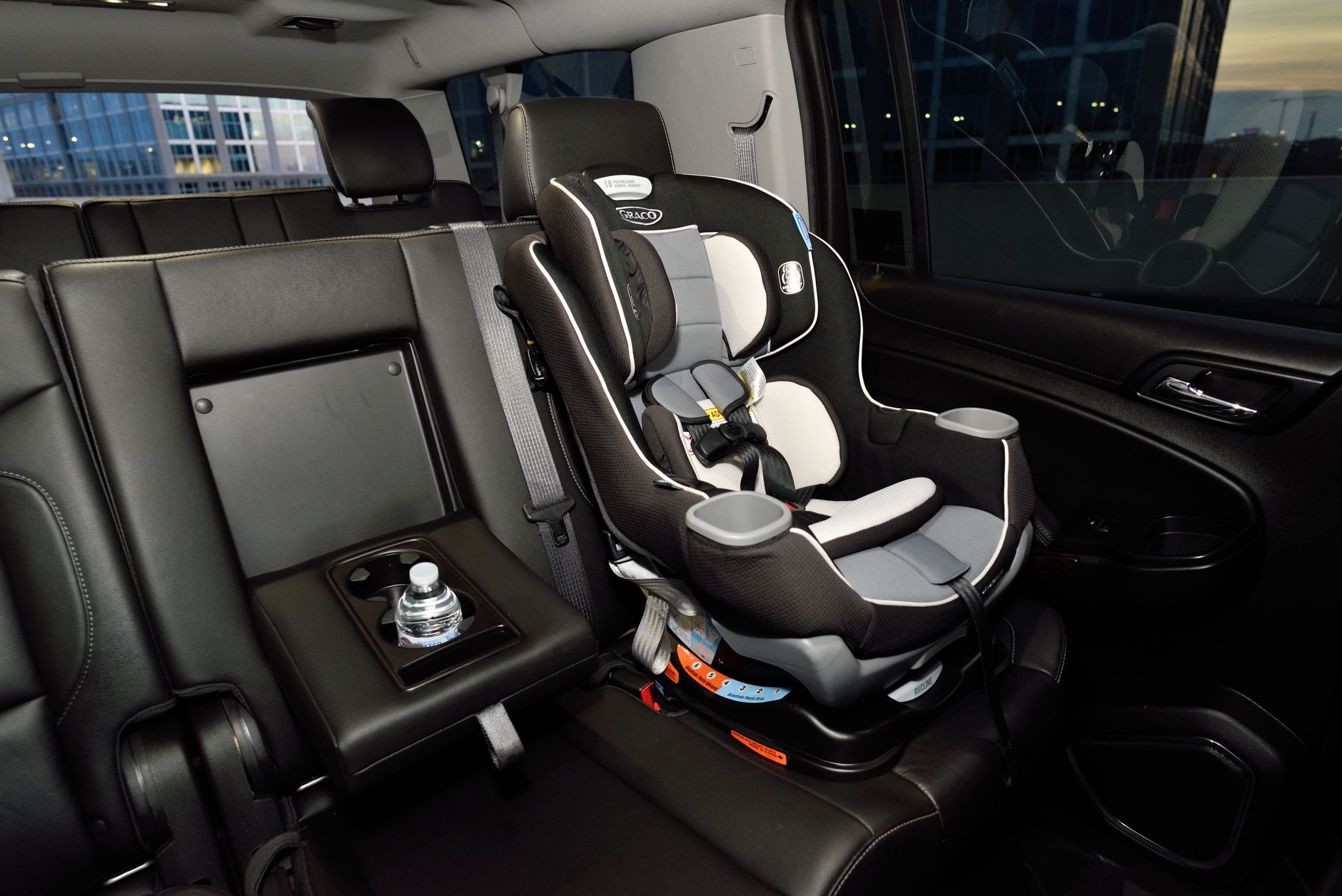
    Every current Tesla — Model 3, Model Y, Model S, and Model X — uses the same basic LATCH layout: lower anchors live in the outboard second-row seats, and the center rear seat is seat-belt-only. Model X breaks the pattern in one useful way, so it’s worth checking your specific model before you buy a seat or install one.

    According to Tesla’s Model 3 owner’s manual, lower LATCH anchors sit between the seat’s backrest and cushion in the two outboard second-row seats, each marked with a small identification button on the seat back. The center rear seat has no LATCH anchors — Tesla’s manual is explicit: “use only a seat belt retained seat in the center position.” Model Y’s manual describes the identical setup, and confirms Model Y’s optional third row has no LATCH anchors at all — a seat back there rides on the seat belt alone.

    Model X is the exception. Its second row supports LATCH in the outboard positions (both seats, if your car has the two-seat monopost configuration), and if the car has a third row, those outboard seats get LATCH anchors too. Model S’s manual matches the Model 3/Model Y pattern — outboard rear seats only, center seat-belt-only, and front-seat installation prohibited outright.

    Every model shares the same weight ceiling: once the combined weight of the child and the seat passes 65 lbs (29.5 kg), Tesla’s manuals say to stop using the lower LATCH anchors and switch to the seat belt with the top tether strap instead. That threshold usually gets hit by a forward-facing toddler seat well before a child actually outgrows it, so don’t assume LATCH is fine just because the seat still physically fits.

    Top tether anchors are separate from the lower LATCH bars and get used on every forward-facing install, LATCH or seat belt. They sit on the shelf behind the rear seats (or, on Model X, on the back of the second- and third-row seats), and Tesla notes the anchor point “may not be readily visible” — look for a small slit in the seat material rather than a visible bracket. Route a single-strap tether over the outside of the head support in an outboard seat, or over the center of the head support in the middle seat; dual-strap tethers go one strap on each side.

    One rule applies across every Tesla: never clip two child seats to the same lower anchor point. Tesla’s manual warns that a single anchor may not hold up in a crash if it’s asked to secure two seats at once. If your seat supports both LATCH and seat belt installation, check its own manufacturer instructions — Tesla’s guidance covers where the anchors are, not which method is right for your particular seat.

    Photo by Lee Salem.

  • Tesla ships FSD v14.3.7 with a rewritten AI compiler for faster reaction time.

    Tesla ships FSD v14.3.7 with a rewritten AI compiler for faster reaction time.

    Tesla has started rolling out software version 2026.21.5, which delivers Full Self-Driving (Supervised) v14.3.7 to Model 3, Model Y, Model S, Model X, and Cybertruck vehicles running Hardware 3 or Hardware 4. According to release notes tracked by Not a Tesla App, the update began reaching cars on August 1, 2026, separate from the broader 2026 Summer Update that shipped the same month.

    The headline change is under the hood. Tesla rewrote the AI compiler and runtime using MLIR, which the company says produces a 20% faster reaction time and speeds up how quickly new models can be trained and shipped. The update also upgrades the neural network’s vision encoder, which Tesla says improves understanding in rare and low-visibility scenarios and strengthens how the car reads traffic signs and 3D geometry.

    On the road, the release focuses on traffic light handling at complex intersections — compound lights, curved approaches, and stopping cleanly for yellow lights — along with reduced lane-biasing and tailgating behavior and more decisive parking-spot selection. Tesla also says the car responds better to emergency vehicles, school buses, and small animals near the road, and recovers automatically from temporary system hiccups without requiring driver intervention.

    A few other features round out the release. Actually Smart Summon is now available on Cybertruck, with its top speed raised to 8 mph. The in-car camera preview, which the July Summer Update added for use in Park, now also works while driving. And Tesla says it unified the underlying model across Smart Summon, FSD, and its Robotaxi service, aiming for more consistent behavior across all three.

    As with prior FSD releases, 2026.21.5 is rolling out gradually rather than to the whole fleet at once. Fleet-tracking site Teslascope shows installs concentrated on newer Hardware 4 vehicles in North America roughly a week and a half into the rollout, with older Hardware 3 cars — which are also eligible per Tesla’s release notes — following on a slower timeline. Owners can check whether the update has reached their car under Software on the vehicle’s touchscreen; Tesla’s in-app release notes remain the official source for exactly what shipped to a given car.

    Photo by Leonardo Gonzalez.

  • Your Tesla lease is ending. Here are the four options Tesla actually gives you.

    Your Tesla lease is ending. Here are the four options Tesla actually gives you.

    Tesla starts reaching out 30 to 60 days before your lease matures, according to Tesla’s own lease-end support page, and from there you have four choices: return the car, buy it, extend the lease, or roll into a new one.

    Return the vehicle

    This is the default if you do nothing. Tesla schedules an inspection to flag excess wear and tear, worth addressing beforehand since it turns into charges. Before drop-off, you’ll do a factory reset to clear your personal data, and you need to bring both key fobs plus the mobile charging bundle that came with the car. Any end-of-term charges show up in the Tesla app within two business days of the return.

    Buy the vehicle

    The purchase price is your lease’s residual value, the number set when you signed, plus a purchase fee of up to $350 and local taxes, per Tesla’s support page. That residual figure is fixed regardless of what the car is actually worth on the used market now. Lease End’s guide to the process puts the decision simply: if your Tesla’s current market value is higher than the residual, you have positive equity and buying it out can make financial sense. If the market value has dropped below the residual, returning it is usually the better move. You request the payoff quote through the Tesla app, and that quote is typically only valid for a short window, so don’t wait to act on it once you have a number. Note that Tesla Lease Trust vehicles in Iowa and Louisiana aren’t eligible for this option.

    Extend the lease

    If you’re within three months of your lease’s maturity date and current on payments, Tesla lets you extend for up to six months through the Financing section of the Tesla app. This buys time if you’re not ready to decide, and Tesla’s terms allow you to return the car before the extension period ends and pay only for the months you actually used, not the full extension.

    Upgrade to a new Tesla

    Trading your leased car in for a new one comes with loyalty incentives Tesla applies when you link the new order to your existing lease. Tesla’s support page points customers to its ownership loyalty team directly for the specifics, since incentives vary based on your current lease and what you’re ordering next.

    Whichever direction you’re leaning, the practical first step is the same: pull your payoff quote and inspection details from the Tesla app before your return window closes, since several of these options only work if you act while your lease is still current.

    Photo by AI25.Studio Studio.

  • Towing cuts your Tesla’s range hard. Plan charging stops around it, not your dashboard estimate.

    Towing cuts your Tesla’s range hard. Plan charging stops around it, not your dashboard estimate.

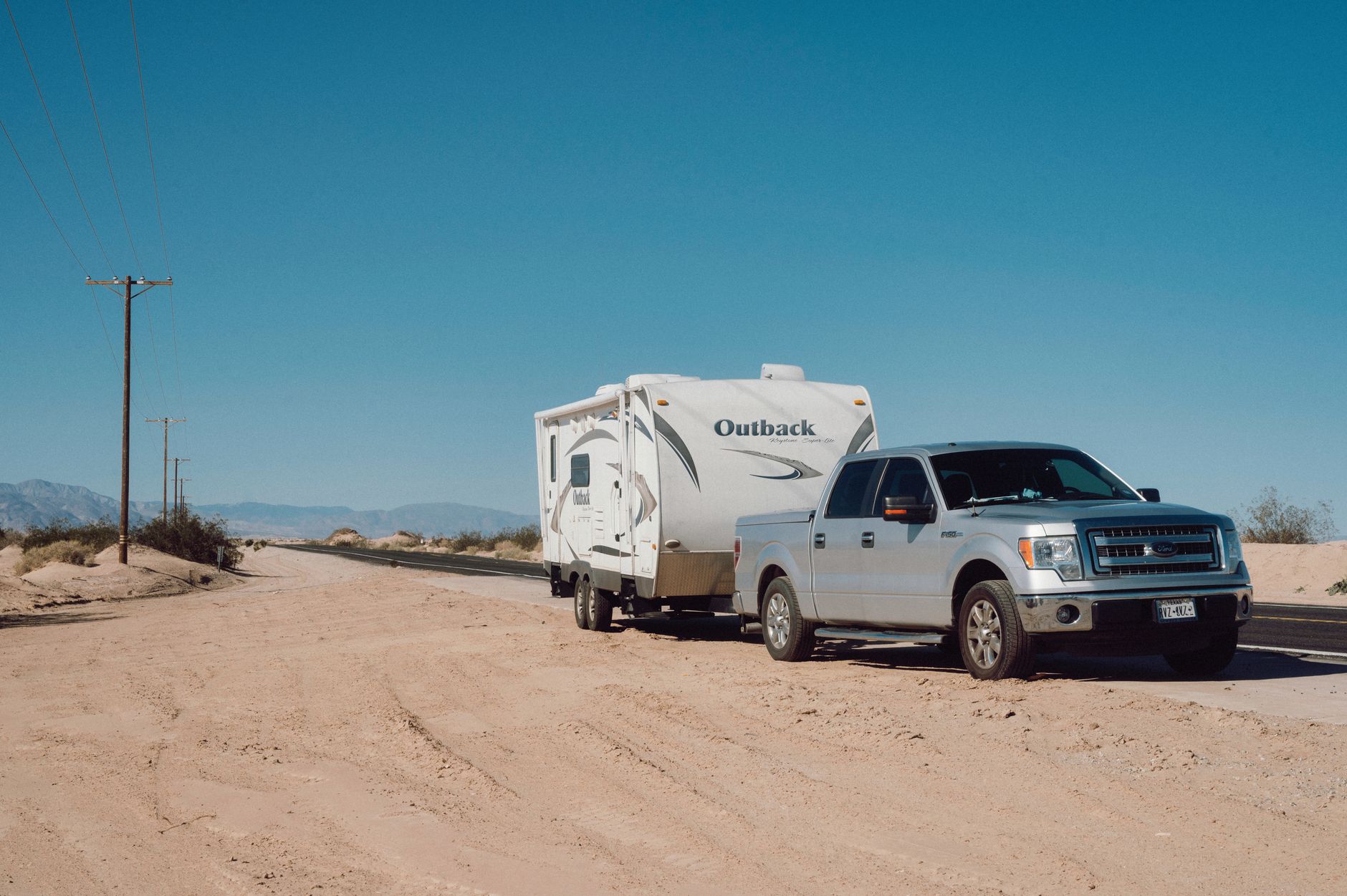
    Your Tesla’s rated range assumes you’re not towing anything. Hook up a trailer and that number stops meaning much. Tesla’s own Model Y owner’s manual puts it plainly: “Towing a trailer increases vehicle weight and drag. As a result, driving range can decrease significantly.” The same language appears in the Model X manual.

    How much range you actually lose depends heavily on the trailer’s shape and your speed, more than on weight alone. InsideEVs tested this directly: a tri-motor Cybertruck towing a roughly 7,000-lb Rivian R1T on a trailer, close to the truck’s towing limit, used 70 kWh of its 123-kWh pack over an 86-mile mixed-terrain loop. That works out to a 60% range cut versus the truck’s rated 320 miles, projecting out to roughly 149 miles on a full charge instead of 320. Half the battery was gone after just 49 miles.

    What you can actually tow

    Towing capacity varies a lot by model and even by wheel size. Per Tesla’s owner’s manuals and shop specs: a Model Y with the tow package is rated for 3,500 lbs. A Model X tops out at 5,000 lbs on 20″ wheels, but drops to 3,500 lbs if it’s wearing the 22″ wheel option. The Cybertruck’s dual- and tri-motor versions are rated up to 11,000 lbs; the single-motor version is limited to 7,500 lbs. None of those numbers tell you what your remaining range will look like once you’re actually pulling the load.

    Trailer Mode changes your estimates, but not enough

    Tesla’s Trip Planner does try to account for towing. According to the owner’s manual, “Trip Planner attempts to adjust estimates based on Trailer Mode, but actual energy consumption may vary,” and Tesla’s own guidance is to plan charging destinations accordingly rather than trust the adjusted number outright. Trailer Mode itself engages automatically when you plug in a trailer’s electrical connector while parked, or you can turn it on manually from Controls > Dynamics > Trailer Mode.

    How to plan the actual trip

    Treat any towing range estimate as optimistic. A few adjustments that matter more while towing than driving solo:

    • Plan for roughly half your normal range between stops, not the number on the dash, especially at highway speeds where aerodynamic drag from the trailer does more damage than the trailer’s weight.
    • Slow down. The gap between towing at 60 mph and 75 mph can be the difference between manageable range loss and a serious one.
    • Check that your planned Supercharger stops have pull-through stalls or enough room to maneuver with a trailer attached — not every station does.
    • Budget extra charging time. Towing raises energy consumption, so you’ll be charging more often and, at a given state of charge, potentially waiting on slower charging curves than an unloaded car sees.

    None of this means towing with a Tesla is impractical. It means the dashboard number you’d trust on a normal drive isn’t the number to plan a towing trip around.

    Photo by Alfo Medeiros.

  • California will knock $3,500 off your first Tesla, while the funding lasts.

    California will knock $3,500 off your first Tesla, while the funding lasts.

    California is now handing first-time electric vehicle buyers an instant $3,500 discount on a new Tesla Model 3 or Model Y, through a state program called MyFirstEV. Unlike the old federal tax credit, you don’t file for it later. The discount comes off the price at the point of sale.

    The program comes from SB 168, signed by Governor Newsom in July, and is run by the California Air Resources Board. The state put up $135.5 million, and participating automakers, Tesla among them, match that dollar-for-dollar. That funds a $3,500 rebate on new zero-emission vehicles and a $1,750 rebate on qualifying used ones.

    What actually qualifies

    To get the new-vehicle rebate, you need to be a first-time ZEV buyer or lessee, and you sign an attestation confirming that. The vehicle’s base MSRP has to be $50,000 or under. That’s the important detail for Tesla shoppers: it’s the base model’s price that counts, not what you actually pay after options, so a Model 3 or Model Y with upgrades can still qualify as long as the entry trim is priced under the cap. According to InsideEVs, that currently limits Tesla’s participation to the Model 3 and Model Y, not Model S, Model X, or Cybertruck.

    Used EVs qualify for the smaller $1,750 rebate if the vehicle sells for $25,000 or less, is at least two model years old, and comes certified pre-owned from a franchised dealership. Plug-in hybrids don’t count; hydrogen fuel-cell vehicles do.

    Why the timing matters

    The program went live on August 3, 2026, and rollout dates vary by automaker. Teslarati reports that orders need to be placed on or after that date, with delivery completed while funds remain available. That last part is the catch: CARB is explicit that the rebate runs on a first-come, first-served basis until each automaker’s share of the money is gone, and each automaker’s allocation is separate. One brand running out doesn’t affect another’s.

    Nothing here guarantees Tesla’s allocation will still be funded by the time you’re ready to order. If you’re a first-time EV buyer in California weighing a Model 3 or Model Y, the practical move is to confirm the rebate is still showing at checkout on Tesla’s site or with your delivery advisor before you count on it, rather than assuming it’ll still be there once you’ve finished configuring.

    The rebate can also be combined with other CARB incentive programs, including the Driving Clean Assistance Program and Clean Cars 4 All, for buyers who qualify for those separately. It has no effect on federal incentives, since the federal EV tax credit itself no longer applies to vehicles acquired after September 30, 2025.

    Photo by Kindel Media.