Blog

  • What Tesla has actually confirmed about FSD v15

    What Tesla has actually confirmed about FSD v15

    Tesla says its next Full Self-Driving architecture, FSD v15, is being built to run on the same Hardware 4 computer already installed in cars today, and the company is now targeting a launch window of late 2026 into early 2027.

    What Tesla has actually confirmed

    At a JPMorgan investor event held at Tesla’s Fremont factory, the company described v15 as a “step-change” built on seven core technologies, roughly 40% of which are already running in the Austin robotaxi fleet, according to Electrek’s reporting on the event. Tesla also said it is rolling out an upgraded AI4.5 computer with roughly 10% more compute and double the memory, but maintains that existing HW4/AI4 hardware is sufficient to run v15 itself.

    That hardware claim traces back further, to Tesla’s Q1 2026 earnings call, where Elon Musk said v15 is being designed to “squeeze every ounce of performance out of the existing Hardware 4 units” rather than requiring the newer AI5 chip, and put the release at “the end of 2026, or start of 2027,” per Not a Tesla App’s writeup of that call. The version is described as a full architectural overhaul, moving from roughly a 1-billion-parameter driving model to one built around 10 billion parameters.

    Why the hardware promise is worth watching

    Tesla made a nearly identical sufficiency claim about Hardware 3 before walking it back — HW3 cars ended up with a stripped-down “Lite” build of FSD v14 rather than the full version. Electrek’s report on the JPMorgan event flags that same history as a reason to treat the “HW4 is enough” promise with some caution this time. Nothing about v15 is running in customer cars yet, and unsupervised FSD deployment more broadly is still tied to state-by-state legalization, not just a software update landing on the car.

    Dirty Tesla covered Musk’s earlier FSD v15 comments in a video posted July 24, 2026, walking through what an architecture jump like this could mean for how the car drives day to day.

    That video reflects one creator’s read on Musk’s remarks, recorded before the JPMorgan event above. The hardware and timeline details in this article come from Tesla’s own earnings call and the reporting linked above, not from the video.

    Photo by Leonardo Gonzalez.
  • Tesla names 36 new Supercharger sites picked by owner vote

    Tesla names 36 new Supercharger sites picked by owner vote

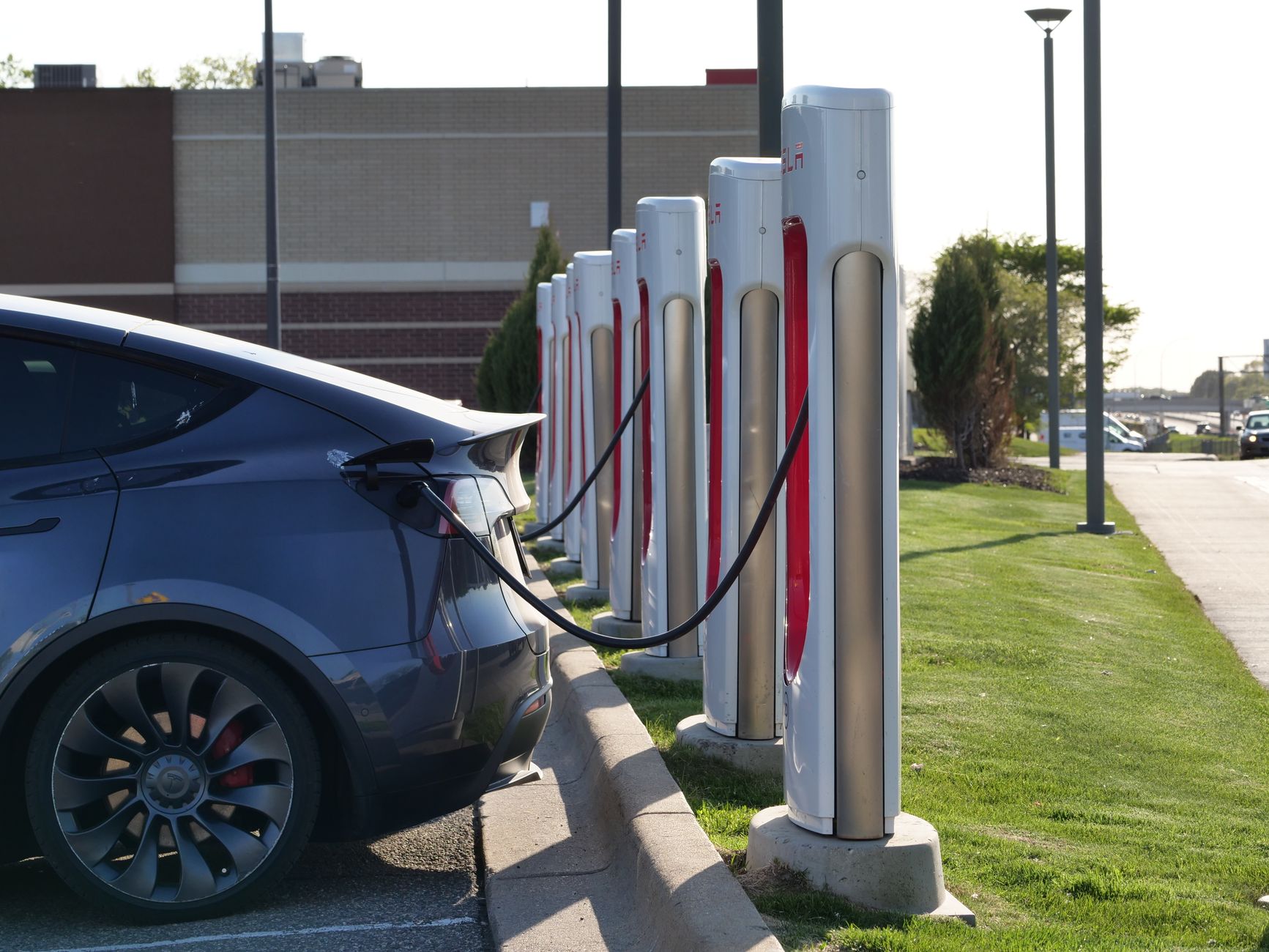
    Tesla announced the winners of its latest Supercharger Voting round on August 25, revealing 36 new locations selected by owners across North America, South America, Europe, the Middle East, and Asia-Pacific, according to Not a Tesla App. The winning sites include 16 in the United States, three in Canada, and locations spread across 15 other countries and regions, including Australia, Japan, South Korea, Taiwan, Malaysia, Israel, Italy, Croatia, Hungary, Poland, Portugal, Serbia, Switzerland, Turkey, the United Kingdom, and Colombia.

    The results come from Tesla’s Supercharger Voting program, which has run on a quarterly cycle since 2022. Account holders get up to five votes per round, with a maximum of one vote per proposed site, and can also nominate locations not yet on the map. Voting has already reopened for the next selection round.

    Winning a vote is not a finished charger

    A win in the voting round does not guarantee a charger goes live on any set timeline. As Tesla North reported, sites still need to clear land acquisition, power hookups, and local permitting before construction can begin, so the 36 newly announced locations could take months or longer to open depending on the market. Tesla North also noted that an eight-stall Supercharger recently opened in Princeton, New Jersey, that had itself been a prior voting winner, illustrating the typical lag between a site being chosen and a charger actually opening to drivers.

    Neither Tesla nor the outlets reporting the winners have published exact street addresses for the 36 sites; that detail typically follows once permitting is further along. Tesla has not set a public timeline for opening any of the newly selected locations.

    Part of a broader charging build-out

    The voting program is one piece of Tesla’s wider Supercharger expansion this year, which has also included large urban projects such as a planned 124-stall V4 site in San Francisco and continued growth of the Supercharger for Business program that lets third parties, including EVgo, install Tesla-built and Tesla-operated stalls. The owner-vote mechanism remains distinct from those efforts in that it lets Tesla’s existing driver base directly influence where the network grows next, rather than Tesla or a partner selecting sites unilaterally.

    Owners who want a say in the next round can cast votes at Tesla’s Supercharger Voting page, where the current cycle is now open following the announcement of the August 25 winners.

    Photo by Giant Asparagus.

  • What riding in the Model Y L’s third row is actually like on a real road trip.

    What riding in the Model Y L’s third row is actually like on a real road trip.

    The Model Y L’s whole reason for existing is trips like this one: six seats across three rows, built for families who’ve outgrown the standard Model Y. Here’s what that layout actually gives you, and how it held up on a real drive.

    The layout, on paper

    Model Y L uses a 2+2+2 configuration — two front seats, two second-row captain’s chairs, and a two-seat third row — instead of the standard Model Y’s bench-plus-optional-jump-seats setup, according to Electric Cars Report’s coverage of the launch. Tesla rates it at 325 miles of EPA range and a 4.4-second 0-60 time, with pricing starting at $61,990 for the Launch Series trim.

    Watch: Dirty Tesla’s road trip take

    Dirty Tesla took the Model Y L on a real road trip and posted the results on August 24, 2026:

    The video is one family’s real-world reaction to riding in the six-seat layout over the course of an actual trip — genuinely useful as a sense of what it’s like day to day, but it’s one household’s experience, not a substitute for checking Tesla’s own published specs and configurator before you order.

    Photo by Leo Lu.

  • Tesla’s Austin robotaxis went a full reporting window without an at-fault crash. Here’s the context.

    Tesla’s Austin robotaxis went a full reporting window without an at-fault crash. Here’s the context.

    Newly released federal data shows Tesla’s Austin robotaxi fleet reported zero at-fault crashes during the mid-June to mid-July 2026 reporting window, according to filings under the National Highway Traffic Safety Administration’s Standing General Order on crash reporting. It’s a real number, but it comes with real caveats.

    What the filing actually shows

    Two incidents were reported in that window, per Tesla North’s reporting on the filing: in Austin, another vehicle struck a passenger car, which then collided with a Tesla robotaxi; in Dallas, a parked vehicle backed into a stationary robotaxi. In both cases, Tesla’s own reporting attributes fault to the other driver, not the robotaxi — hence “zero at-fault,” not zero incidents.

    Why that distinction matters

    The Standing General Order requires manufacturers and operators to self-report crash data to NHTSA; the agency doesn’t independently verify who was at fault before the data is published. Tesla’s robotaxi fleet is also still small relative to competitors like Waymo, which limits how much any single reporting window’s numbers can tell you about long-term safety performance. None of that makes the filing untrue — it just means “zero crashes” is more precisely “zero at-fault incidents, self-reported, over one month, from a small fleet.”

    Watch: Ryan Shaw covers the numbers

    Ryan Shaw walked through this data point on his channel on August 20, 2026:

    The video is a useful summary of the headline, but the filing itself and the caveats above are the actual evidence — treat the video as a pointer to the story, not the source for it.

    Photo by Reinaldo Simoes.

  • Tesla’s certified pre-owned program, explained.

    Tesla’s certified pre-owned program, explained.

    Tesla launched a real Certified Pre-Owned program in the US and Puerto Rico on August 14, 2026. If you’ve been shopping Tesla’s used inventory and wondering whether “certified” actually means anything more than a marketing label, here’s what it covers.

    What the certification actually checks

    Every Certified Pre-Owned Tesla goes through what Tesla describes as more than 115 inspection points covering cosmetic, functional, and structural condition, according to Tesla Oracle’s reporting on the launch. The inspection is also meant to confirm the car has no history of structural damage or airbag deployment before Tesla lists it as certified.

    Warranty coverage

    Certified vehicles come with a one year or 10,000-mile Pre-Owned Vehicle Limited Warranty, whichever comes first — on top of whatever’s left of the car’s original New Vehicle Limited Warranty. That combination matters most on older cars: even a 5-to-6-year-old Model S or Model 3 with well over 50,000 miles reportedly still qualifies for the same one-year certified coverage, even though its factory warranty has long since expired.

    What it costs, and what’s included

    Early certified listings started around $20,600 for a 2020 Model 3 with roughly 93,650 miles, and around $25,000 for Model Y and Model S. Certified cars also come with one complimentary month each of FSD (Supervised) and Premium Connectivity, so you can try both before deciding whether to pay for either going forward.

    Should you pay more for certified over a regular used listing

    If you’re buying from Tesla’s used inventory directly, a certified listing gets you a documented inspection standard and a real warranty backstop that a non-certified used listing won’t have — worth the premium if you’re financing a car you plan to keep for years. It’s less of a factor if you’re buying from a private seller or a third-party dealer, where Tesla’s certification doesn’t apply at all. Either way, ask specifically whether a listing is certified before assuming it is — Tesla’s used inventory still includes plenty of non-certified vehicles at lower prices.

    Photo by Erik Mclean.

  • Cybertruck vs. Model S: which one actually fits you.

    Cybertruck vs. Model S: which one actually fits you.

    Cybertruck and Model S sit at opposite ends of Tesla’s lineup — one’s a work-and-adventure truck, the other’s a flagship sedan. They rarely compete for the same buyer, but if a truck bed and a trunk are both genuinely on your list, here’s what actually separates them.

    Price and range

    Cybertruck starts at $71,985 for the Dual Motor AWD, moves to $81,985 for Premium AWD, and tops out at $101,985 for the Cyberbeast — all EPA-rated around 320 to 325 miles of range. Model S starts higher, at $86,630 for the standard All-Wheel Drive trim and $101,630 for Plaid, but it goes farther on a charge: 410 miles for the base trim, 368 for Plaid. If range per dollar matters most to you, Model S wins; if you want a five-figure-lower entry price, Cybertruck does.

    Speed and towing

    Model S is the quicker car in a straight line — 3.1 seconds to 60 mph for the standard AWD trim, 1.99 seconds for Plaid, per Kelley Blue Book. Cybertruck’s Dual Motor and Premium trims run 4.1 seconds, and the Cyberbeast drops to 2.6 seconds. But towing is where the comparison stops being close: Cybertruck tows up to 7,500 pounds on the base trim and 11,000 pounds on Premium and Cyberbeast, according to Cars.com’s spec sheet. Model S isn’t built or rated for towing at all.

    What you actually get to carry

    Both seat five. Model S is a liftback sedan with roughly 25 cubic feet of trunk space — expanding to about 61 cubic feet with the rear seats folded — plus a small frunk, per Kelley Blue Book. Cybertruck has an open composite bed rated for up to 2,500 pounds of payload, which is a fundamentally different kind of cargo space: better for tools, gear, or a weekend load than for groceries and luggage you want to keep out of the weather, unless you add the optional tonneau cover.

    The actual decision

    If your list includes hauling a trailer, carrying dirty gear, or wanting the higher ground clearance and steer-by-wire feel of a truck, Cybertruck is the only one of the two built for that. If you want the fastest, longest-range, most conventional daily driver Tesla sells, with real trunk space you don’t have to think about protecting from rain, Model S is the better fit. Comparing them on paper is mostly useful for confirming which category you actually need — most buyers cross-shopping Tesla end up choosing based on that, not on 0-60 times.

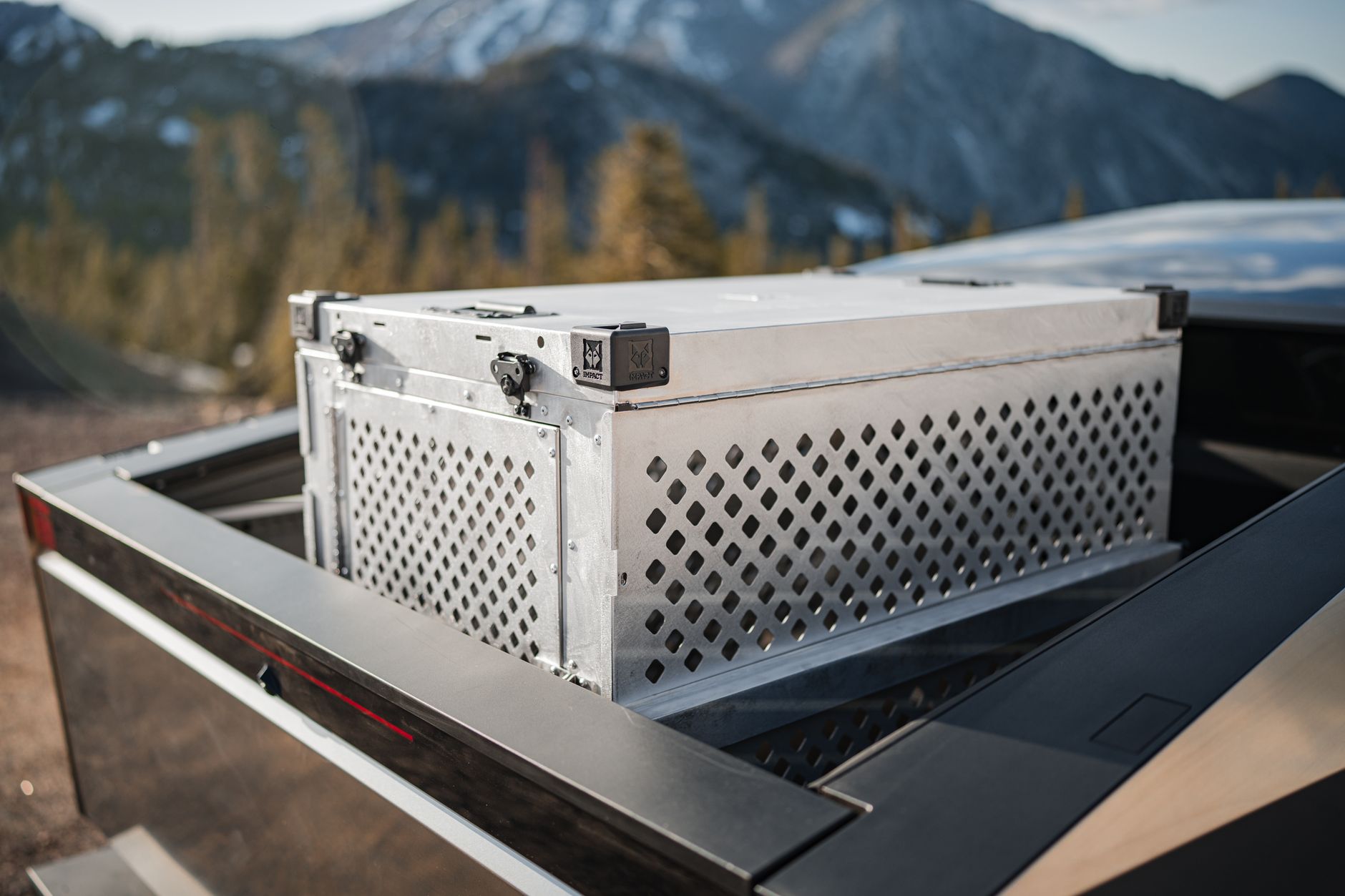
    Photo by Impact Dog Crates.

  • Tesla confirms a Cybercab launch event for September 3 in Austin.

    Tesla confirms a Cybercab launch event for September 3 in Austin.

    Tesla has confirmed a Cybercab launch event for September 3, 2026, in Austin, Texas, according to invitations sent to riders of its Robotaxi app. The event marks the first public look at the two-seat, steering-wheel-free vehicle actually joining Tesla’s Austin robotaxi service.

    What’s actually happening

    Access to the event is limited to top performers in Tesla’s Robotaxi rider sweepstakes, with winners announced August 26. Attendees must be at least 21 with a valid ID, and the RSVP deadline is August 30. Tesla says it will livestream the event, so it won’t be invite-only for everyone — anyone can watch online.

    Cybercab itself isn’t new; Tesla unveiled the concept in 2024. What’s new is a confirmed date for it to start operating as part of the same robotaxi fleet that currently runs Model Y vehicles in Austin. Per Electrek’s reporting, the production version carries a 48 kWh battery and is rated at roughly 165 Wh per mile of efficiency — Tesla’s most efficient vehicle to date, though official EPA figures haven’t been published.

    What it means if you own a Tesla

    If you’re not in Austin or don’t use the robotaxi app, this event doesn’t change anything about your car. It’s worth knowing about mainly because it signals Tesla is starting to diversify its robotaxi fleet beyond the Model Y — which matters if you’re weighing whether to use Tesla’s ride-hailing service on a future trip, or just tracking where FSD and robotaxi development are headed. Electrek’s reporting notes the current unsupervised robotaxi fleet remains small, in the neighborhood of 20 to 30 vehicles, so Cybercab’s addition is an expansion of vehicle types, not a leap in scale.

    Tesla has not said when, or if, Cybercab will be available outside Austin, or whether it will ever be sold directly to individual owners rather than operated as part of the robotaxi network. Until Tesla says otherwise, treat any timeline beyond September 3 as unconfirmed.

    Photo by Elsie Soto.

  • What FSD 14.3.7 actually feels like in the new Model Y L.

    What FSD 14.3.7 actually feels like in the new Model Y L.

    FSD (Supervised) v14.3.7 has been rolling out since early August, and it’s one of the more substantial updates to the software’s driving model this year.

    What actually changed

    Per Tesla’s official release notes, the update upgrades the reinforcement-learning stage used to train the FSD neural network and rewrites the AI compiler and runtime using MLIR, which Tesla says improves reaction time by roughly 20%. The notes also describe improved handling at complex intersections with compound traffic lights, better recognition of unusual objects near the vehicle’s path, and a unified model shared across FSD, Smart Summon, and Robotaxi.

    Rollout status

    As with any Tesla software update, 14.3.7 is rolling out gradually rather than to every car at once — check Software in your car’s touchscreen to see if it has reached your vehicle, and don’t assume a feature described here is active on your car until you’ve confirmed the version number matches.

    One owner’s first drive

    Dirty Tesla took FSD 14.3.7 for a first drive in a new Model Y L and shared their impressions:

    That’s one driver’s real-world experience on one route — useful for a feel of how the update behaves, but the release notes above are the actual source for what changed and why.

    Photo by Lucas Pezeta.

  • Tesla is building one of the East Coast’s biggest Superchargers, right in Queens.

    Tesla is building one of the East Coast’s biggest Superchargers, right in Queens.

    Tesla is building a new Supercharger station in Maspeth, Queens, at 48-26 54th Road, and it’s big enough to change how you’d plan a charging stop in or around New York City.

    What’s going in

    The site is planned for 64 to 68 stalls, which puts it in a tie with Halifax, North Carolina for the largest Supercharger station on the East Coast — not an outright record, despite some headlines calling it the biggest. It includes two pull-through stalls built for EVs towing trailers, and sits right off I-495, making it a practical stop for drivers heading between Long Island and Manhattan.

    Why it matters for city charging

    Manhattan currently has five Supercharger locations, but most offer only about four stalls each — nowhere near enough for peak demand. Queens, Brooklyn, and the Bronx have more available real estate and heavy through-traffic, which is why Tesla has been expanding into the outer boroughs rather than trying to squeeze more stalls into Manhattan itself.

    The Electric Viking covers the project and its scale on their channel:

    The video is one creator’s take on the project; the stall count, location, and comparison to other East Coast stations above come from Teslarati’s reporting, not the video itself.

    Photo by Reinhard Bruckner.

  • What Tesla’s financing rates actually look like right now.

    What Tesla’s financing rates actually look like right now.

    Tesla’s financing rate isn’t a fixed number — it moves month to month, and it differs by model and trim. As of a tracked update on August 21, 2026, Tesla was advertising 0% APR financing on the Model Y for terms up to 72 months, while the Model 3 was listed separately at 5.69% APR for the same term range. That’s a wide enough gap between the two cars that the headline “0% Tesla financing” you might see mentioned online doesn’t automatically apply to whichever model you’re ordering.

    Why the rate you see may not be the rate you get

    Advertised APRs are typically tied to the top-of-range credit tier, and Tesla’s own financing page discloses that rates vary by region and change through the month as Tesla adjusts demand. Older financing deals reported earlier in 2025 required minimum down payments — as much as 15% on some Model Y trims — to unlock the lowest advertised rate, with a higher fallback rate for smaller down payments. Treat any number you read, including the ones in this article, as a starting point for comparison rather than a locked-in offer, and confirm the actual APR, term, and down payment requirement in Tesla’s order flow before you sign.

    What to compare it against

    A 0% or low-single-digit Tesla rate is hard for an outside lender to beat, but it’s still worth a five-minute check with your bank or credit union — some offer promotional EV loan rates, and a pre-approval gives you a real number to compare Tesla’s offer against rather than taking the advertised rate on faith. Also confirm whether the low rate requires full-price financing with no manufacturer rebate applied, since Tesla (like most automakers) sometimes structures the best rate and the biggest price reduction as mutually exclusive options.

    Because these numbers shift often, check the rate in your own account at order time — the specific APR quoted here reflects late August 2026 and will likely be different by the time you’re ready to sign.

    Photo by Vitaly Gariev.