Blog

  • Model 3 vs. Cybertruck: which one actually fits you.

    Model 3 vs. Cybertruck: which one actually fits you.

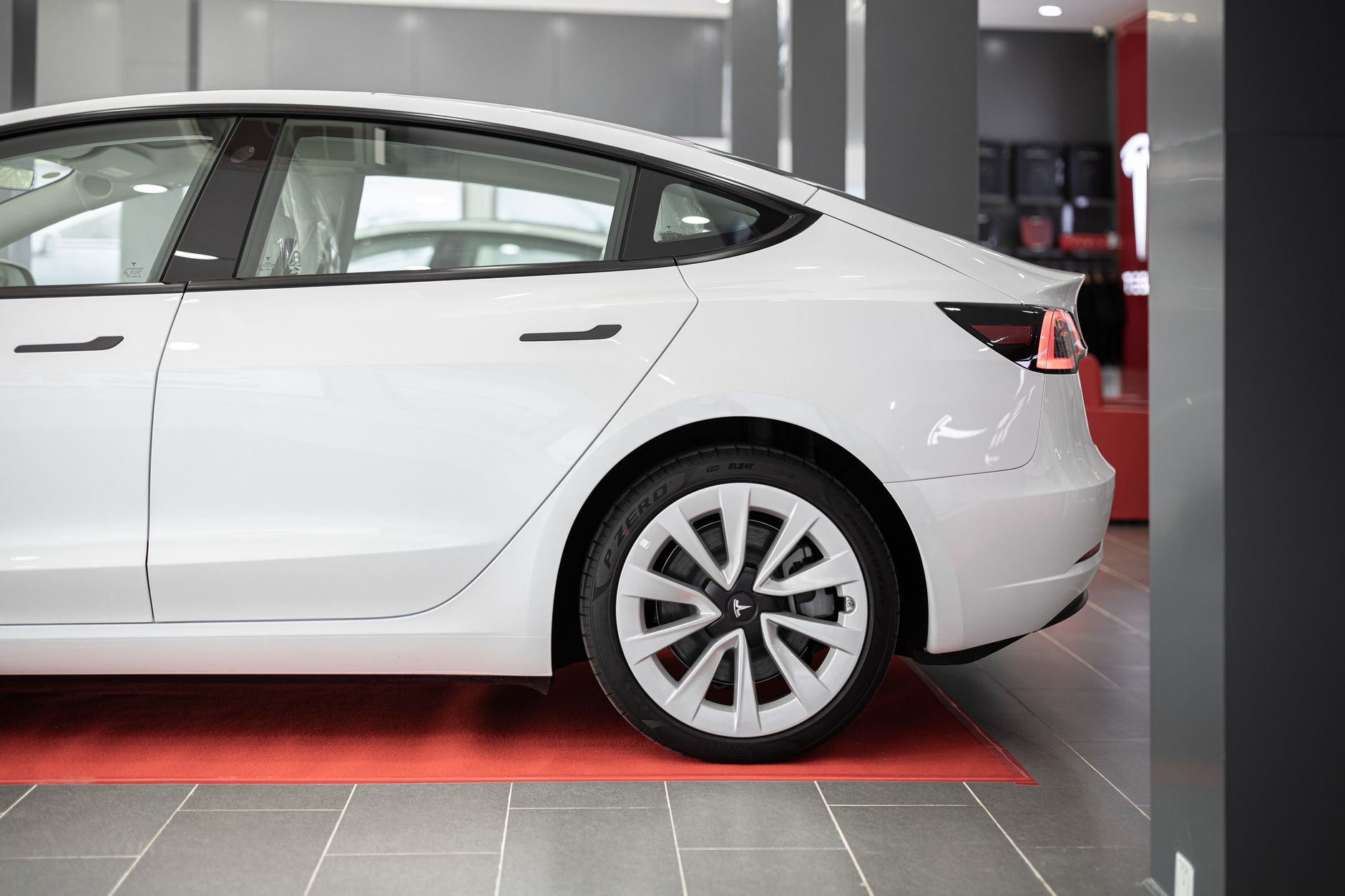
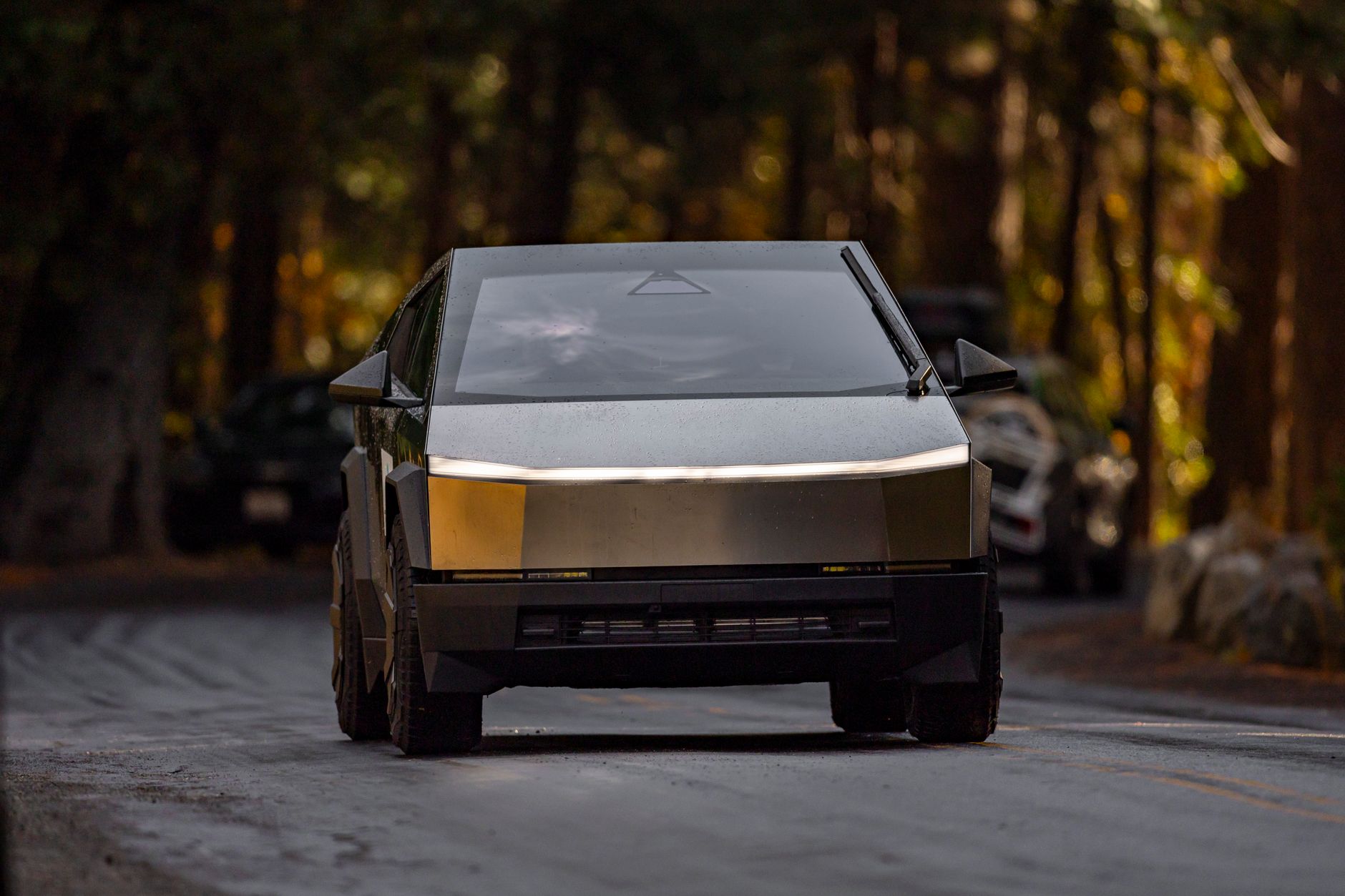
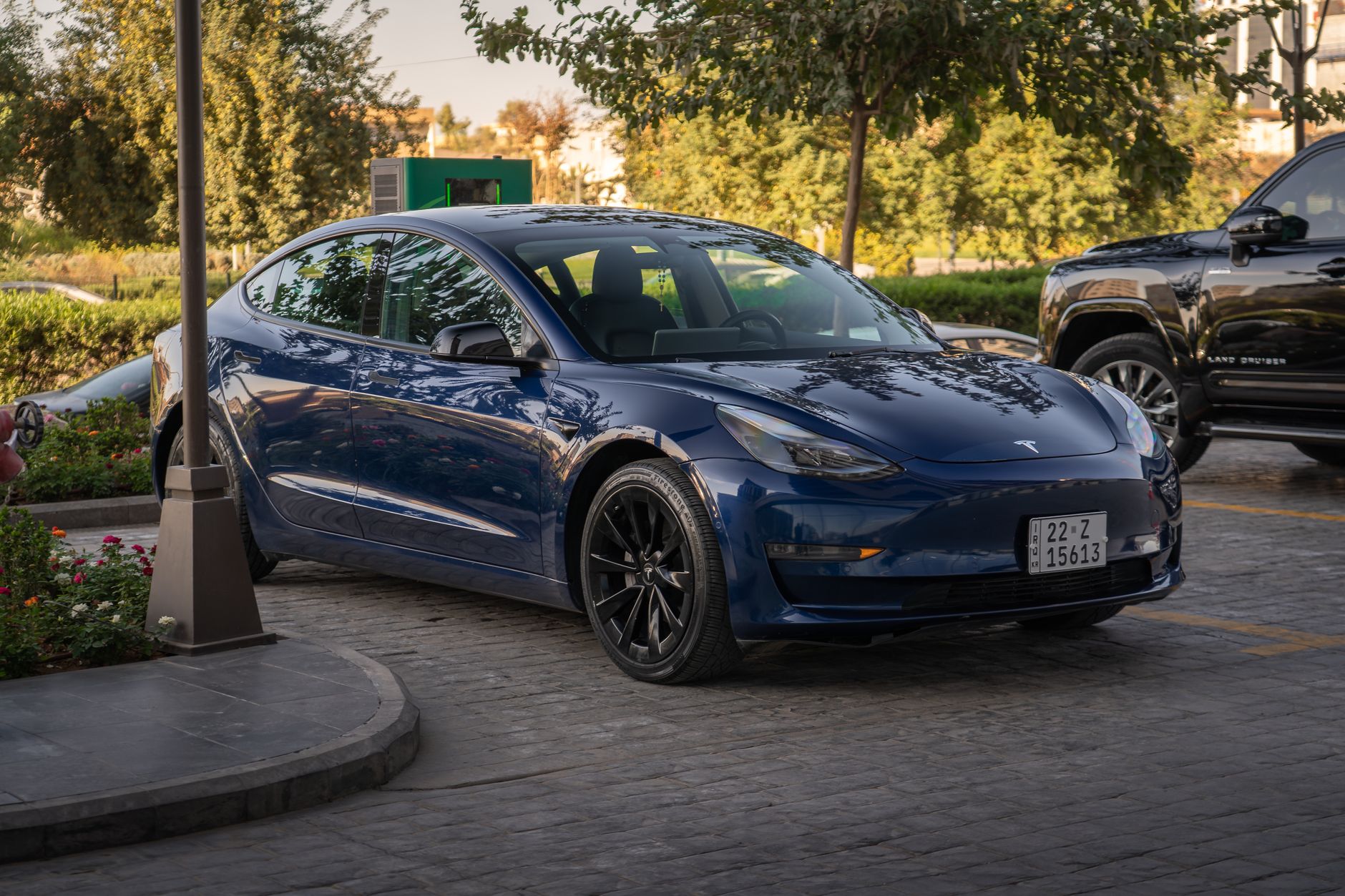
    Tesla’s lineup runs from a compact sedan to a full-size pickup, and no two vehicles in it are as different as the Model 3 and the Cybertruck. One is built to be cheap to own, easy to park, and efficient. The other is built to haul, tow, and stand out in a parking lot. Here’s how they actually compare.

    Price and Range

    The Model 3 starts at $36,990 for the rear-wheel-drive Standard trim, climbing to $42,490 for Premium RWD, $47,490 for Premium AWD, and $54,990 for the Performance model, according to Cars.com’s 2026 Model 3 research page. EPA-rated range on those trims runs from 309 miles on the Performance model up to 363 miles on Premium RWD.

    Cybertruck pricing jumped on August 25, 2026, when Tesla raised the Dual Motor AWD trim from $69,990 to $74,990 and the Premium AWD from $79,990 to $84,990, according to Electrek. The Cyberbeast held at $99,990. As of that increase, the cheapest Cybertruck costs roughly double the cheapest Model 3, and range doesn’t scale with the price gap: the AWD and Premium AWD trims are EPA-rated at 325 miles and the Cyberbeast at 320 miles, per Cars.com’s Cybertruck page — in the same range as the Model 3 despite costing tens of thousands more.

    Size: Sedan vs. Truck

    This is where the two stop being comparable in any casual, parking-lot sense. The Model 3 measures 185.8 inches long, 72.8 inches wide, and 56.7 inches tall on a 113.2-inch wheelbase, per Wikipedia’s specifications table for the Model 3. The Cybertruck is 223.7 inches long, 80.0 inches wide, and 70.7 inches tall on a 143.1-inch wheelbase, according to the equivalent table for the Cybertruck. That’s nearly 38 inches of extra length and 14 inches of extra height. The Cybertruck won’t fit in some standard garage stalls or older parking structures that the Model 3 slides into without a second thought.

    Cargo and Towing

    The Model 3 carries its cargo in two sealed compartments: a 19.8-cubic-foot rear trunk and a 3.1-cubic-foot front trunk, for roughly 23 cubic feet total, according to a breakdown of Model 3 trunk space. It isn’t rated to tow anything.

    The Cybertruck’s open bed measures 6 feet long and 67 cubic feet in volume, with a roughly 17-cubic-foot lockable sub-trunk underneath it and a front trunk of about 7 cubic feet, per a Cybertruck bed-dimensions breakdown. Payload tops out at 2,500 pounds on the AWD trims, and towing capacity reaches 11,000 pounds on AWD and Premium AWD, dropping to 7,500 pounds on Long Range RWD, confirmed on Wikipedia’s Cybertruck specifications table. That’s a bed you can actually get dirty, plus a hitch rated for a decent-size boat or camper — neither of which the Model 3 offers at any price.

    Who Each One Actually Fits

    If your Tesla needs to disappear into a compact parking spot, cost the least to buy and insure, and go the farthest on the smallest battery, the Model 3 is the easy answer. It’s the cheapest way into the lineup, and its sealed trunk and frunk cover groceries, luggage, and most everyday hauling without anything riding exposed to weather.

    If you tow a trailer, haul gear that shouldn’t ride in a carpeted trunk, or need real payload and ground clearance, the Cybertruck is the only Tesla built for it. You’ll pay close to double the entry price and give up easy parking to get there, but nothing else Tesla sells comes close to its bed volume or towing numbers.

    Photo by 04iraq.
  • Why one Supercharger stall can charge faster than the one next to it.

    Why one Supercharger stall can charge faster than the one next to it.

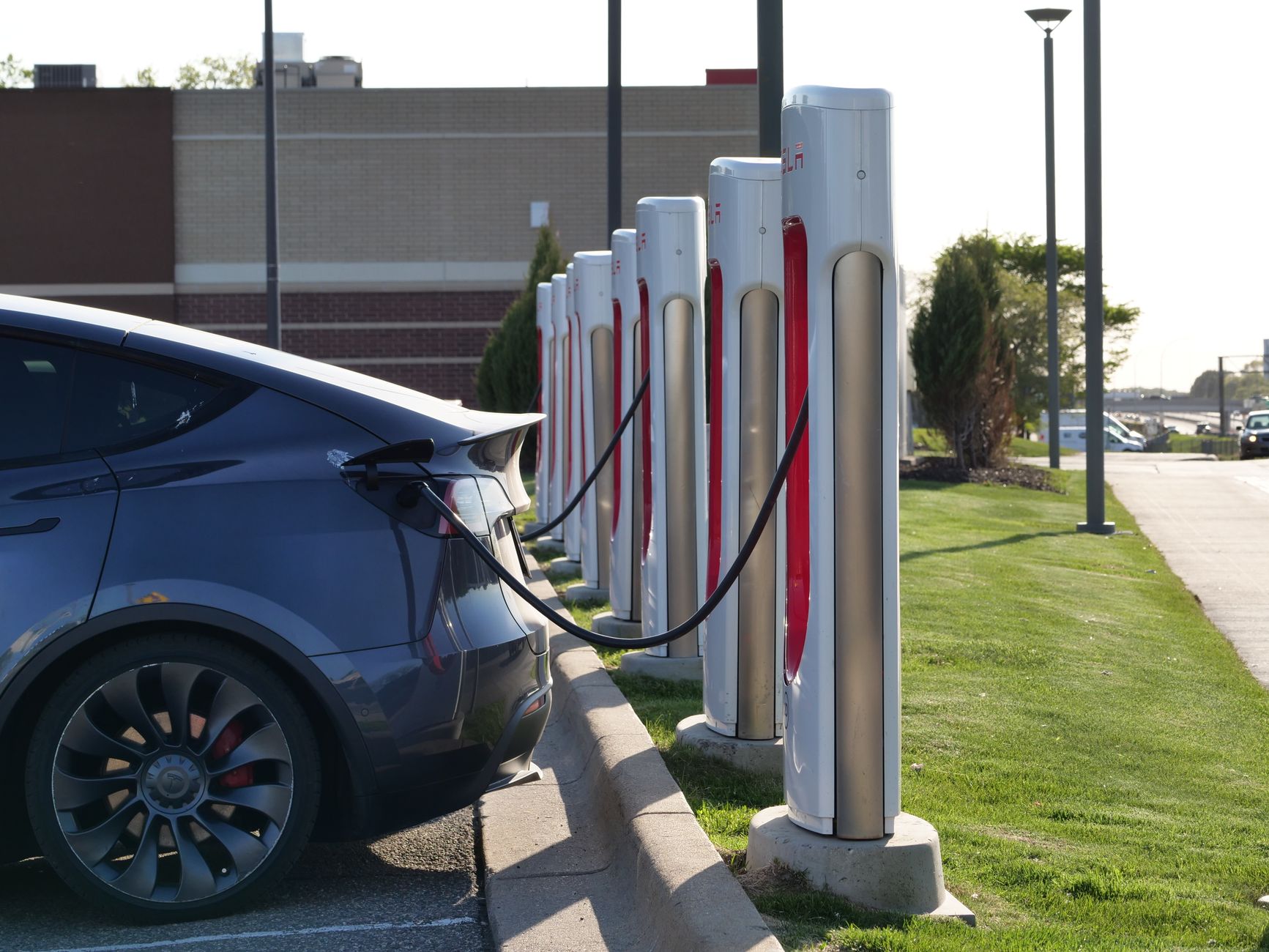
    Two Teslas can plug in at the same Supercharger site and get very different charging speeds, even with similar batteries and similar states of charge. Part of the reason is which stall each car happens to use, not just which site it’s at.

    The biggest factor is which hardware generation is bolted to the ground at that stall.

    V3 versus V4, in plain terms

    “V3” and “V4” refer to the power cabinet that feeds a row of stalls, not the stall itself. Tesla’s V3 cabinet, which the company built for about seven years before retiring it, tops out at 250 kW per car and was designed around the 400-volt electrical systems used in the Model S, 3, X, and Y. Tesla’s newer V4 cabinet raises the ceiling to up to 500 kW and supports a much wider 400-to-1,000-volt range, which is what lets Cybertruck’s 800-volt battery pack charge meaningfully faster there than it can on V3. A single V4 cabinet also feeds up to eight stalls, twice what a V3 cabinet handles, according to reporting on the V3-to-V4 transition. For most Model S, 3, X, and Y drivers, though, a V4 stall currently still delivers around the same 250 kW peak they’d get on V3 — the 500 kW ceiling is mainly for Cybertruck and future 800-volt vehicles for now.

    So the generation printed on the cabinet sets a hard ceiling on your charging speed before your neighbor ever factors in.

    Why the stall next to you can matter

    At many older Supercharger sites, stalls are wired in pairs that share one power cabinet — think of stalls labeled 3A and 3B. If you’re alone at 3A, you can pull the cabinet’s full output. If someone pulls into 3B while you’re charging, the cabinet splits its power between you, and your charging speed can drop to roughly half what you were getting, especially early in the session when charging rates are highest. This paired setup is a feature of Tesla’s older 150 kW and slower Superchargers. On V3 and V4 hardware, each stall gets its own dedicated power electronics, so a neighbor plugging in next to you doesn’t cut your rate.

    Picking a faster stall

    A few things help when speed matters:

    • Check the hardware first. If a site mixes older and newer cabinets, or if your route options include both an older V2-era station and a nearby V3/V4 one, the newer cabinet is the safer bet for a full-speed charge.
    • At older, paired stations, don’t sit next to an active charger. If stall 3A already has a car plugged in and charging, skip 3B and take an unpaired or fully empty pair instead, per the same CleanTechnica breakdown of Supercharger pairing.
    • Use the live occupancy view before you commit. Tesla’s in-car navigation and app have shown real-time stall-by-stall status since Tesla first rolled it out in 2017, and as of December 2025 Tesla was piloting a 3D site map at select stations that shows each stall as available, occupied, or down before you pull in.

    None of this changes what your car’s battery and battery percentage can accept — that’s a separate ceiling of its own. But the stall you plug into sets a hard limit on top of it, and that limit can vary from one charger to the next at the very same site.

    Photo by Giant Asparagus.

  • What the Q3 delivery push means if you’re ordering a Tesla now.

    What the Q3 delivery push means if you’re ordering a Tesla now.

    Tesla’s third quarter of 2026 ends September 30. If you’re weighing whether to order a Tesla this month, that date is worth understanding, because of how automakers report results to investors and how Tesla has behaved as past quarters closed.

    Why quarter-end matters to Tesla

    Tesla sells directly to buyers instead of through independent dealerships, and it doesn’t count a sale as revenue until the car is delivered and paid for. A finished vehicle still in transit when a quarter closes doesn’t help that quarter’s reported numbers. That’s a structural reason, on top of ordinary sales targets, for Tesla to push hard on deliveries as a deadline nears — a pattern Electrek reported on in 2022, when CEO Elon Musk told employees the scramble “has been a challenge since late 2008” and that “there always seems to be something” that makes a quarter’s final days chaotic.

    What that’s meant for buyers before

    Historically, Tesla’s quarter-end pushes have mostly shown up as discounts and financing offers on cars already built and sitting in inventory, not on new custom orders, which take as long to build as they take regardless of the calendar. In October 2024, Electrek documented Tesla cutting inventory Model Y prices by up to $4,000 and reintroducing 0% APR financing early in the quarter. More recently, in December 2025, Tesla rolled out free upgrades, 0% APR financing, and $0-down leases on select inventory vehicles to close out the year, according to Electrek. GetTesla has covered this pattern before: inventory and demo vehicles are where Tesla’s pricing actually moves, and those deals shift constantly rather than repeating on a fixed schedule.

    None of that is guaranteed to recur. Tesla dropped inventory discounts entirely for roughly a year starting in April 2024, when TechCrunch reported Musk was prioritizing profit margin over sales volume. Quarter-end incentives are a documented pattern in Tesla’s history, not a rule that applies every quarter.

    Why last year’s record quarter isn’t a fair comparison

    Tesla’s biggest quarter ever, 497,099 vehicles delivered in the third quarter of 2025, sometimes gets pointed to as proof of what a quarter-end push can do. But that surge was driven by the federal EV tax credit expiring at midnight on September 30, 2025, a one-time deadline layered on top of the ordinary quarter close, not the routine pattern by itself. That credit is gone now, so the specific pressure that produced last year’s record doesn’t apply to this September.

    What to expect if you order in September 2026

    The bigger factor shaping your timeline right now isn’t the calendar, it’s inventory. Tesla’s second-quarter 2026 production and delivery report showed the company delivering 480,126 vehicles while producing 451,758, drawing down existing inventory by roughly 28,000 units rather than building it up. As of late August, GetTesla reported that new Model 3 and Model Y inventory has stayed scarce, with units occasionally appearing on Tesla’s inventory page before disappearing quickly, a sign that whatever inventory exists is moving fast rather than sitting around waiting for a quarter-end discount.

    If you order a base Model 3 now, Tesla’s own delivery estimates point to January through March 2027, well past this quarter regardless of anything Tesla does in its final days. A Premium Model 3 is currently showing a shorter window, October or November, which lands in the fourth quarter, not the third. A custom order placed this month is unlikely to arrive before September 30 no matter how hard Tesla pushes. An in-stock vehicle remains the faster path to a car this quarter, but you’re buying whatever configuration happens to be sitting on the lot, not necessarily at a marked-down price, and current inventory hasn’t been staying available long enough to assume you’ll have your pick.

    Photo by I’m Zion.

    Photo by I’m Zion.

  • What a base Cybertruck AWD delivery actually looks like.

    What a base Cybertruck AWD delivery actually looks like.

    The base All-Wheel Drive Cybertruck is the cheapest way into Tesla’s truck lineup, but it skips more hardware than a lot of buyers expect. Here’s what the trim actually costs right now, what’s different from the Premium version, and what to check when one of these shows up at pickup.

    What the base AWD trim costs and skips

    Tesla raised Cybertruck AWD and Premium AWD prices by $5,000 on August 25, 2026, putting the base trim at $74,990 and Premium AWD at $84,990 — a gap that was already $20,000 before this increase. For that difference, the base AWD trades away a fair amount. It rides on 18-inch wheels with coil-spring adaptive damping instead of the Premium’s 20-inch wheels and height-adjustable air suspension, uses heated cloth seats instead of heated-and-ventilated vegan leather, and runs a 7-speaker audio system instead of 15 speakers. Towing capacity is 7,500 pounds versus 11,000 on Premium, and payload is 2,006 pounds versus 2,500, according to a trim-by-trim breakdown from Tesla Oracle. Both trims keep the motorized tonneau cover, but the base version leaves out the bed’s L-track tie-down rails. Range and acceleration are unchanged between the two — both are rated at 325 miles and a 4.1-second 0-60 time.

    What to expect on delivery day

    The delivery process itself is the same across trims: you handle insurance, final payment, and any financing paperwork in the Tesla app ahead of your appointment, then sign remaining agreements and accept the vehicle in the app once you arrive, per Tesla’s delivery-day guide. Tesla’s taking-delivery page notes that financed or leased vehicles can still require documents signed and mailed back within 24 hours, using a prepaid envelope left in the vehicle.

    A few things are worth checking specifically on this trim: confirm the wheel and tire package matches your order, since 18-inch wheels are standard and 20-inch wheels are a separate configuration; verify any tow package hardware is installed if you paid for one, since the base trim’s 7,500-pound rating depends on it; and walk the exterior panels for gaps and finish consistency, since the exposed stainless body shows inconsistencies more visibly than a painted truck would. None of that changes the actual check-in process — it’s the same app-based paperwork Tesla uses across the lineup — it’s just what’s worth looking at closely on this specific configuration.

    Dirty Tesla covered a base Cybertruck AWD delivery on August 29, 2026, following one buyer through pickup.

    That video shows one person’s delivery experience, not a guarantee of what yours will look like. For the trim’s actual price, specs, and what’s included, go by the sourced details above rather than anything shown on camera.

    Photo by Stephen Leonardi.

  • Tesla says Optimus robot production has started at its Fremont factory.

    Tesla says Optimus robot production has started at its Fremont factory.

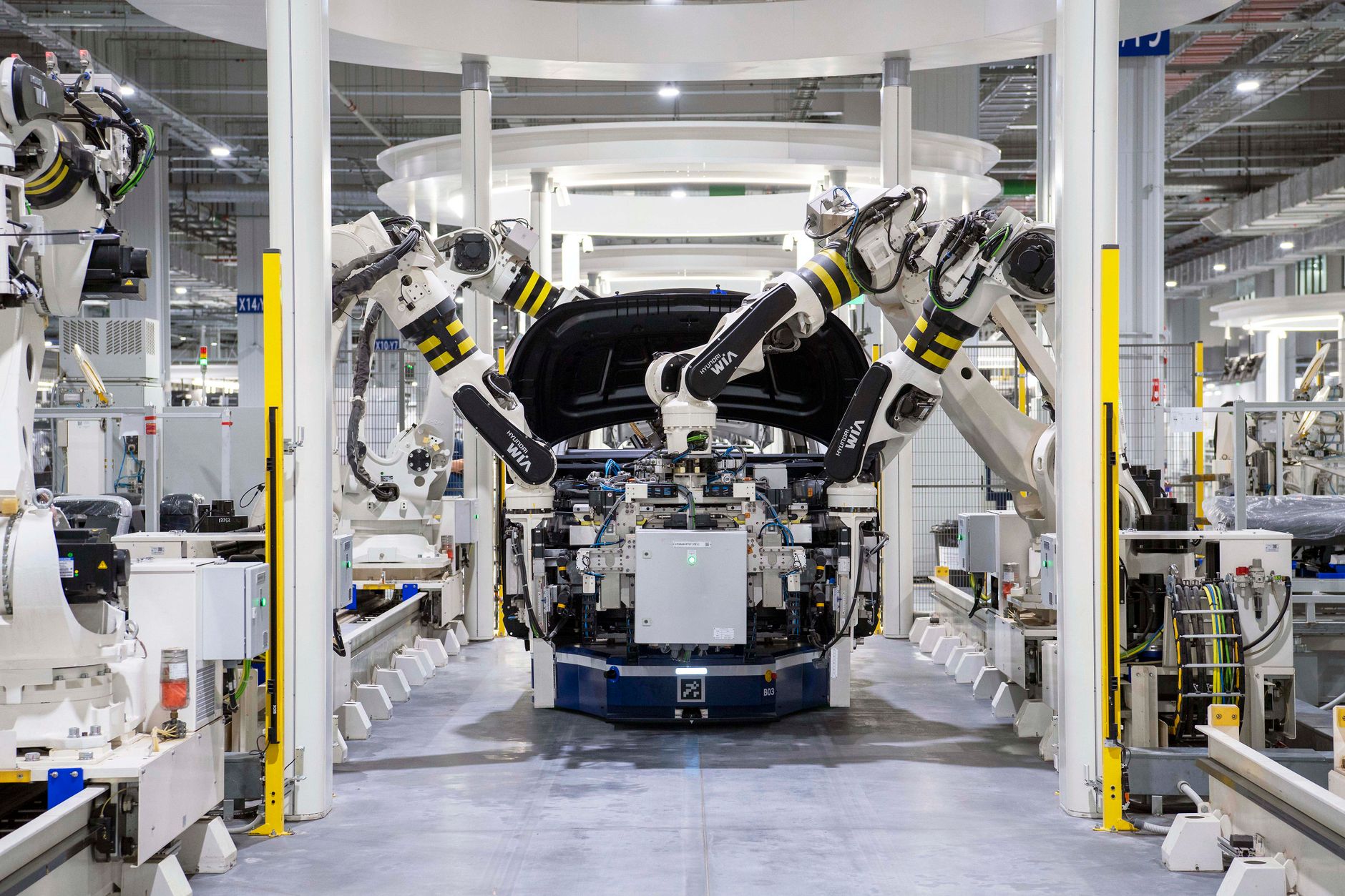
    Tesla has begun building its Optimus humanoid robot at its Fremont, California factory, according to an August 27 report from The Motley Fool. Optimus is a two-legged, human-sized robot Tesla is developing to perform manual tasks in factories and, eventually, homes. Production is running on the same line that used to build the Model S and Model X, which Tesla stopped manufacturing earlier this year and later converted for Optimus, a shift GetTesla covered in July when Tesla was still anticipating a production start.

    Tesla’s own account of the ramp comes from its second-quarter 2026 financial results, released July 22, and the earnings call that followed. On that call, CEO Elon Musk described Optimus as the most difficult product Tesla has ever tried to scale. “The production scaling challenge is very substantial. The hardest product to scale, the hardest one they’ve ever made at Tesla,” Musk said, according to a transcript published by Shacknews. He attributed the difficulty to the robot’s roughly 10,000 unique parts, most of which required Tesla to build a new supply chain rather than adapt an existing one for electric vehicles.

    Musk has repeatedly cautioned that early output will be slow. A summary of the Q2 earnings call notes Tesla expects the initial ramp to follow a flat, gradual curve rather than a fast scale-up, since a bottleneck in any one of the 10,000 parts can slow the entire line. That caution is consistent with Tesla’s own track record on this project: an August 20 Electrek report noted that Tesla had already pushed back an earlier, more specific production window and that Musk had acknowledged no Optimus units were yet doing productive work inside Tesla’s own operations.

    The first robots off the Fremont line are going into what Tesla calls “Optimus Academy,” an internal program that puts early units to work on routine tasks inside Tesla’s own factories rather than shipping them to customers. The idea is to use that real-world floor time to refine the robot’s software and hardware before Tesla scales up output further. Tesla has also continued construction on a dedicated Optimus facility at Gigafactory Texas, intended for a later version of the robot built around parts designed to be easier to manufacture than the current Fremont design.

    For Tesla owners, the news does not change anything about buying, financing, or servicing a car. Optimus is a separate product, built in a separate part of the factory, with no announced price or delivery date for outside buyers. For shareholders and factory-adjacent readers, the update answers a narrower question: the space once used to build the Model S and Model X is no longer sitting idle or merely under construction. It is now producing robots, even if Tesla itself says that output will start small and grow slowly as the company works through a parts list, and a supply chain, it has never had to manage before.

    Photo by Hyundai Motor Group via Pexels.

    Photo by Hyundai Motor Group.

  • What Tesla’s app update 4.60 actually adds, and what’s still coming.

    What Tesla’s app update 4.60 actually adds, and what’s still coming.

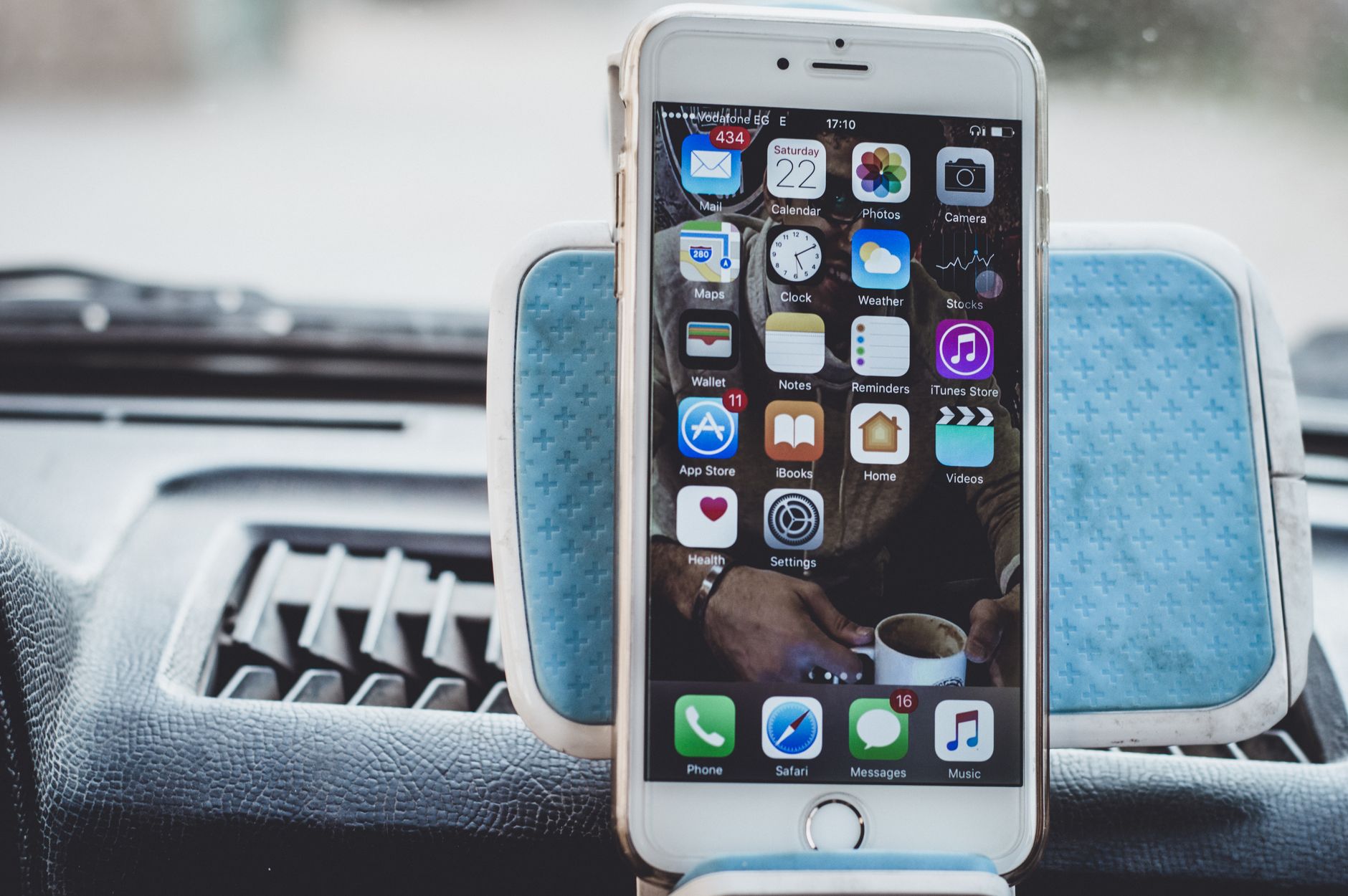
    Tesla quietly updated its mobile app to version 4.60, and the release notes undersell what’s actually inside it. Beyond the visible changelog, code found in the update points to native Passkey login and new wallet features headed to your phone.

    What’s confirmed in the update

    According to Tesla’s official 4.60.0 release notes, this update adds Passkey support as an alternative to typing a password and a 2FA code every time you open the app — instead you’d authenticate with Face ID, Touch ID, or a hardware security key. As of this release, Passkey login isn’t switched on yet; the option exists in the app’s code but Tesla hasn’t activated it for users.

    What else is hiding in the code

    The same update also contains references to expanded Wallet features and to Cybertruck Powershare working with a home Powerwall — a capability Cybertruck owners have been waiting on since Powershare’s original rollout. Neither has shipped yet either; both are still just strings and references inside the app package, not live features. Treat both as “coming,” not “here” — Tesla has a track record of code references sitting dormant for weeks or months before a feature actually activates.

    What it means for your car

    Nothing changes in how you use the app today. Update to 4.60 when your app store prompts you, but don’t expect Passkey login or Powershare-to-Powerwall to show up immediately — Tesla typically flips these features on in a later point release once server-side work catches up with the client code.

    Ryan Shaw dug through the update on his channel on August 28, 2026, walking through what the app changelog leaves out:

    The video above is one creator’s read of the app’s code, not an official Tesla statement about what’s shipping or when — the sourced details above are what to rely on for now.

    Photo by Mustafa ezz.

  • Tesla adds official underseat and center console storage trays for the new Model Y.

    Tesla adds official underseat and center console storage trays for the new Model Y.

    Tesla has added two new official storage accessories for the redesigned Model Y: a $40 underseat storage tray and a $40 set of sliding center console trays. Both are sold through Tesla’s own shop and only fit the newer, refreshed Model Y — not the 2020-2024 version.

    The underseat storage tray

    Tesla’s underseat storage tray, which the company added to its shop in mid-August 2026, is a single injection-molded thermoplastic bin with a non-slip design meant to keep it and its contents from sliding around while driving. It only fits Model Y vehicles built in the second half of 2025 or later — it isn’t compatible with 2020-2024 cars or the six-seat Model Y L. Tesla specifically recommends installing it under the front passenger seat only, saying it doesn’t recommend the driver’s side because loose items could interfere with the pedals. The $40 price includes one bin; owners who want storage under both front seats need to buy two.

    The center console trays

    Separately, Tesla added a $40 set of center console trays in mid-August, also for the redesigned Model Y Premium and Performance built in 2025 or later. The set includes three bins — two for the front center console and one for the armrest storage area — designed to break up the console’s deep, open cargo space into smaller compartments. The top tray slides back and forth so you can reach the lower tray without lifting anything out first.

    Should you buy them

    Both accessories solve a real complaint about the redesigned Model Y: its console and underseat areas are large enough that small items — phones, wallets, sunglasses, chargers — tend to slide around loose. At $40 each, they’re priced in line with what third-party organizer trays already cost, with the advantage of an exact factory fit and no drilling or trimming. Check your build date before ordering, since neither accessory fits a Model Y built before the second half of 2025, and the underseat tray doesn’t fit the Model Y L. If your Model Y predates the refresh, look at aftermarket console organizers instead — they’re built for the older console shape these Tesla accessories don’t cover.

    Photo by Vladimir Srajber.

  • Tesla’s Robotaxi service now runs 6 a.m. to 10 p.m. across six cities.

    Tesla’s Robotaxi service now runs 6 a.m. to 10 p.m. across six cities.

    Tesla’s Robotaxi service now runs 6 a.m. to 10 p.m., seven days a week, across all six of its live markets — Austin, Dallas, Houston, Miami, Orlando, and Tampa — according to Tesla’s own announcement reported by Not a Tesla App on August 26, 2026. It’s a wider daily booking window than riders in most of those cities had before, and Tesla says it comes with a bigger unsupervised fleet and smarter routing behind it.

    What changed

    Austin’s unsupervised Robotaxi service had been running roughly 6 a.m. to 2 a.m., a schedule set last September before the service expanded into Dallas, Houston, Miami, Tampa, and Orlando. Tesla has now standardized hours across all six markets to the shorter 6 a.m.–10 p.m. window instead. Tesla says its unsupervised fleet is “a lot bigger” than before, and that upgraded vehicle-distribution and routing intelligence should mean shorter wait times for a ride — though the company hasn’t published exact vehicle counts. Independent community tracking puts the current unsupervised fleet at roughly 85 vehicles across all six cities, but that figure is an outside estimate, not a Tesla-confirmed number.

    Why the hours moved instead of just growing

    Some of the “growth” here may be existing vehicles shifting from supervised to unsupervised operation rather than new cars joining the fleet outright. Tesla has also reportedly found references to a “Roaming” feature for its upcoming Cybercab, which would let idle vehicles move toward busier areas on their own to cut wait times — a preview of how Tesla wants to manage fleet positioning as it scales, rather than something live for riders today.

    What it means if you own a Tesla

    This doesn’t touch your own car if you’re not in one of the six Robotaxi markets or don’t use the app — it’s about Tesla’s ride-hailing service, not a software update to personally owned vehicles. If you do ride-share in Austin, Dallas, Houston, Miami, Orlando, or Tampa, plan around the new 6 a.m.–10 p.m. window rather than the later hours some of these markets used to offer. The service’s unsupervised rides began in Austin in January 2026, after roughly seven months of supervised operation starting in June 2025 — worth keeping in mind as a still-young, geographically limited service rather than a nationwide robotaxi network.

    Photo by Makara Heng.

  • Tesla is raising Wheel and Tire Protection Plan prices — but only on Performance trims.

    Tesla is raising Wheel and Tire Protection Plan prices — but only on Performance trims.

    Tesla is raising the price of its Wheel and Tire Protection Plan for Performance trims, according to subscriber notices reported by Not a Tesla App on August 28, 2026. The change takes effect October 1, 2026, and only touches the two Performance-trim monthly rates — every other trim keeps its current price.

    What’s actually changing

    The Model 3 Performance plan moves from $16 to $24 a month, a 50% jump. The Model Y Performance plan moves from $20 to $24 a month, a 20% increase. Both Performance trims land on the same $24 rate, even though they started at different prices when Tesla launched the plan nationwide in August 2025. Standard Model 3, Model Y, Model S, Model X, and Cybertruck pricing is unchanged for now.

    What the plan actually covers

    Wheel and Tire Protection is a subscription add-on, separate from Tesla’s standard new-car warranty. It covers tire and wheel damage from potholes, nails, and road debris: unlimited tire puncture repairs with no deductible at a Tesla Service Center, and a $25 deductible per incident if a tire or wheel needs to be replaced outright. It does not cover cosmetic damage like curb rash, theft, vandalism, or tires worn below 4/32″ of tread. Tesla says the coverage rules and benefits themselves aren’t changing — only the monthly price for Performance trims.

    What it means if you own one

    If you’re on a non-Performance trim, nothing changes for you on October 1. If you have a Model 3 Performance or Model Y Performance already enrolled, budget for the higher rate; the $24 monthly plan works out to $288 a year. Performance trims typically ride on wider, lower-profile wheels that are more expensive to replace and more prone to pothole and curb damage, which is likely why Tesla priced them separately from the start. Before you renew or sign up, it’s worth pricing out one Performance tire and wheel replacement at a local shop and comparing that to a year of premiums — for some owners the math still favors the plan, especially in areas with rough roads; for others, setting the difference aside in savings may cover the same risk for less.

    Photo by I’m Zion.

  • An owner retrofitted Hardware 4 into an older Model 3 — ahead of Tesla’s own upgrade program.

    An owner retrofitted Hardware 4 into an older Model 3 — ahead of Tesla’s own upgrade program.

    A Tesla owner has gotten Hardware 4 running in a 2022 Model 3 that left the factory with the older Hardware 3 computer — doing, unofficially and today, something Tesla itself doesn’t expect to offer at scale until 2027.

    What was actually done

    Software engineer Michał Gapiński, known for building the Tesla Android CarPlay project, pulled a Hardware 4 (AI4) computer and cameras from a Model Y and installed them in his older Model 3, according to Not a Tesla App’s report published August 21, 2026. The work involved custom adapters for the camera connectors, some low-level software modifications, and physically mounting the new computer with drilled brackets, epoxy, and zip ties. As of that report, the car was driving with the new hardware, though Gapiński said some features were still incomplete.

    Why this is ahead of Tesla’s own plan

    Tesla has publicly committed to eventually offering HW3 owners a path to newer hardware, but Not a Tesla App’s coverage of that announcement puts the next-generation AI4+ computer at not entering production until mid-2027, with an expected but unconfirmed retrofit cost in the $3,000–$5,000 range once it’s available. Gapiński’s version exists now, outside any official program, using a computer sourced from a donor Model Y rather than a Tesla-supplied part.

    What this doesn’t mean for your car

    This is one person’s unofficial hardware project, not a Tesla-supported service, and it isn’t something Tesla will do for you at a service center. It doesn’t change the timeline above, and it doesn’t mean Hardware 3 owners have a faster or cheaper path to newer hardware today. What it does show is that the retrofit is mechanically possible with parts that already exist — which is part of why the story caught attention in the first place.

    Ryan Shaw covered the retrofit on his channel on August 20, 2026:

    The video is one creator’s summary of the project; the facts above — what was actually installed, and Tesla’s own stated timeline — come from the linked reporting, not the video itself.

    Photo by Jeremy Waterhouse.