Blog

  • Do you need to replace your Tesla’s wiper blades? Here’s how to tell, and what to buy.

    Do you need to replace your Tesla’s wiper blades? Here’s how to tell, and what to buy.

    If your wipers are streaking, skipping, or squealing across the glass, the blades are worn, not the motor. It’s a five-minute fix once you have the right size.

    What size to buy

    Tesla’s own Model 3 wiper blade listing and Model Y wiper blade listing confirm the factory sizing: both cars use a 26-inch blade on the driver’s side. The passenger side differs by model — 19 inches on Model 3, 20 inches on Model Y. Buying the wrong passenger-side length is the most common mistake, since the two cars look similar but aren’t interchangeable there.

    Why the connector matters more than the brand

    Tesla uses Bosch-style wiper arm connectors, and most quality aftermarket blades — including Bosch ICON blades, which are the same design Tesla installs from the factory — include an adapter for it. The adapter size can vary by model year, so check that the box or listing explicitly lists Model 3 or Model Y compatibility rather than assuming any 26-inch blade will click into place.

    How to swap them without a fight

    Park the car, then go to Controls > Service > Wiper Service Mode in the touchscreen. This lifts the wipers away from the glass and, just as importantly, disables auto-wipe so the arm doesn’t swing into your hand mid-swap. From there, unclip the old blade from the hook-style arm, seat the new blade until it clicks, and confirm it’s locked by giving it a gentle tug before exiting service mode.

    Plan on replacing blades roughly once a year, sooner if you park outside in full sun or after a hard freeze — UV exposure and ice both crack the rubber edge faster than mileage does.

    Photo by Lucas Pezeta.
  • Tesla just recalled 3 million cars in China over door handles. Here’s what it means for US owners.

    Tesla just recalled 3 million cars in China over door handles. Here’s what it means for US owners.

    Chinese regulators recalled almost 3 million Tesla vehicles this week over a safety concern that has nothing to do with software glitches or battery defects: owners and rescuers may not be able to find the emergency door release fast enough in a serious crash. It’s not a US recall, but the underlying issue is already moving through US regulators too.

    What happened in China

    On August 21, 2026, Tesla filed a recall covering nearly 3 million vehicles in China — about 1.9 million Model Y and 970,000 Model 3 units. The problem: the mechanical emergency door release, meant to work as a backup when the car loses electrical power, is tucked into the door trim closely enough that occupants and first responders can struggle to find it during a severe collision. Tesla’s fix is free and doesn’t require a shop visit: warning labels marking the release location, plus an over-the-air update that automatically lowers the windows after a crash is detected.

    Why US owners are hearing about this too

    The China recall is a China-market action — it does not cover US-sold Model 3 or Model Y vehicles. But the same design question has been in front of US regulators for months. In July 2026, the National Highway Traffic Safety Administration denied a petition asking it to open a formal defect investigation into 2022 Model 3 door releases, after finding only a single matching complaint among roughly 179,000 vehicles in that petition. At the same time, NHTSA granted a separate petition to start rulemaking on an industry-wide standard: a “robust and obvious door egress system” for all new vehicles, not just Teslas.

    That rulemaking process takes years and, once finalized, would apply to future vehicles rather than the ones already on the road. So for now, nothing changes for a US Model 3 or Model Y owner — there’s no recall, no required service, and no software update tied to this specific action.

    What to actually do

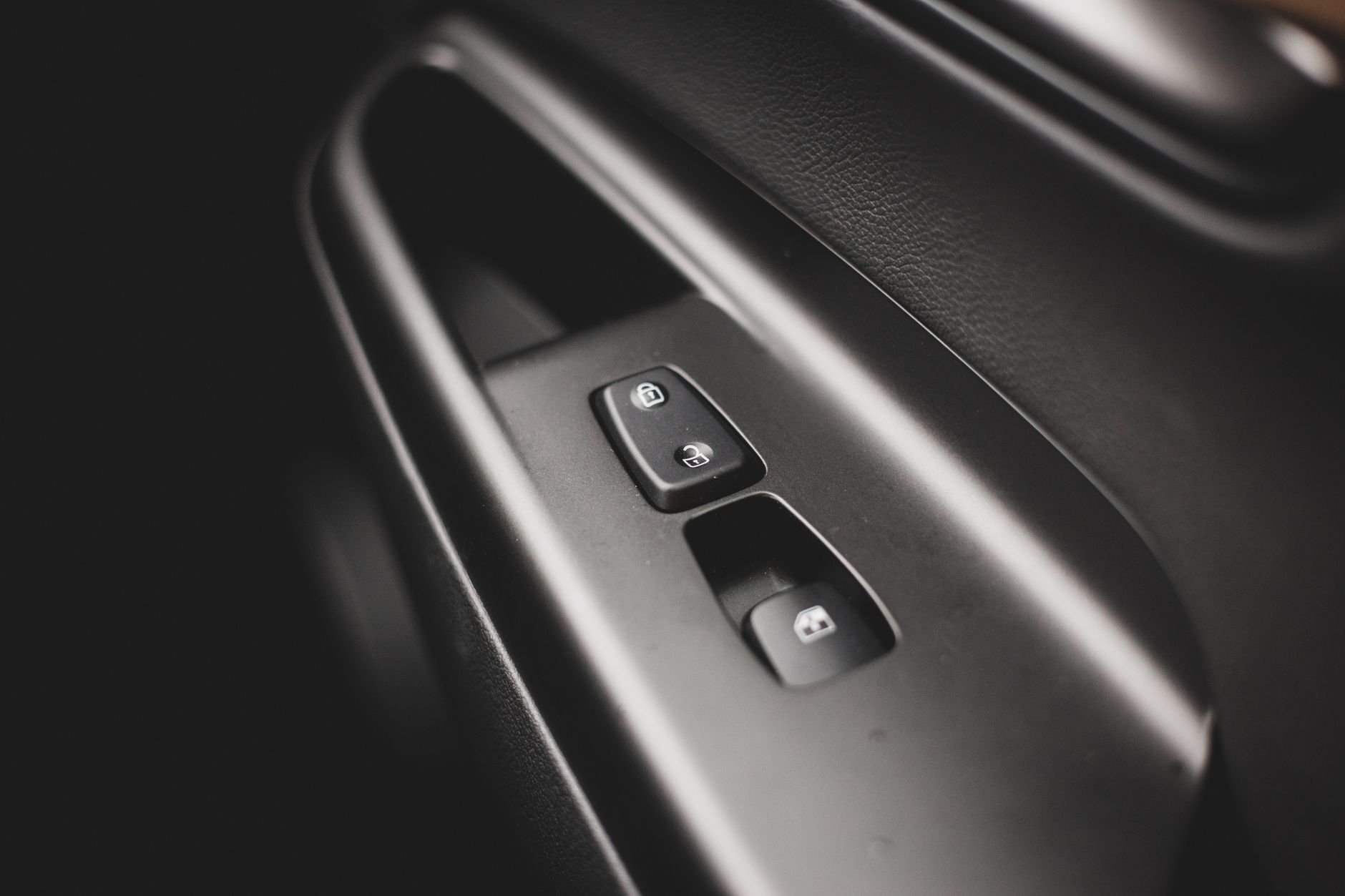
    You don’t need to do anything for this China recall — it isn’t yours. But it’s a good prompt to know your own car’s manual release before you ever need it under stress. On a Model 3 or Model Y, the front manual releases are low on the door panel near the window switches, and rear manual releases are typically under the door pocket or near the seat track, depending on model year. If you can’t find yours in a few seconds in a parked, well-lit car, it will be harder in a real emergency. Tesla’s official support site lists the exact release locations for your specific model and year.

    China has also said it will require mechanical door releases on all new vehicles starting January 1, 2027, ending fully concealed electronic handles there. Whether that pressure eventually reshapes US design standards is now a rulemaking question, not a recall question — worth watching, not worth acting on today.

    Photo by Erik Mclean.

  • Tesla Semi just landed its biggest order yet — 500 trucks.

    Tesla Semi just landed its biggest order yet — 500 trucks.

    Tesla’s Semi program picked up its largest order to date: 500 electric trucks bought by Einride, a Swedish freight technology company, in a deal Teslarati reported on August 18.

    Who’s actually buying, and why it’s not Amazon’s order

    Einride, not Amazon, is the buyer — the trucks will run on Einride’s own fleet software platform and serve Einride’s freight customers, which include Amazon among others. The 500 Semis roll out over the next two years across California, Texas, New Jersey, Illinois, and Georgia, with the first units arriving in September 2026, built at Tesla’s Sparks, Nevada plant. Einride’s CEO called it “proof point that we can execute at the scale our customers demand,” while Tesla’s Semi program director pointed to lower cost-per-mile from fuel and maintenance savings as the pitch to freight operators.

    Why this matters beyond the truck itself

    The Semi has moved slowly from early pilot programs with companies like Frito-Lay and PepsiCo toward larger commercial fleets, and an order this size is a real signal that logistics companies are willing to commit at scale — not just proof-of-concept numbers.

    The Electric Viking covers the order on his channel:

    The video’s framing leans toward the more dramatic “for Amazon” angle — the sourced facts above are the more precise version of who’s actually placing the order.

    Photo by Omar Gerardo.

  • What actually happens when you remove a Tesla wrap after years of sun.

    What actually happens when you remove a Tesla wrap after years of sun.

    A vinyl wrap protects your Tesla’s factory paint, but the wrap itself isn’t permanent. Knowing roughly how long it lasts helps you plan for removal or a re-wrap before it starts looking worn.

    How long a wrap actually holds up

    A quality cast vinyl wrap typically lasts 5 to 7 years with proper care, according to wrap-industry pricing guides. Cheaper calendered vinyl — the less durable, less expensive option — tends to shrink, fade, or peel closer to the 2-to-3-year mark. Material and installation together typically run $2,000–$7,000 for a full wrap depending on vehicle size and finish, so the choice of vinyl grade matters both for how long it looks good and for what you’ll spend the next time around.

    What to expect at removal

    A wrap that’s been on for several years of sun exposure doesn’t always come off as cleanly as one removed after a year or two — UV exposure can make adhesive more stubborn, and edges are the most likely spots to show wear first. That’s exactly the situation Kim Java documents on her channel, showing what a multi-year-old wrap actually looks like coming off.

    Kim Java walks through pulling a wrap off after four years on the car in this video from August 13, 2026:

    Treat the video as one owner’s real-world result — wrap condition at removal depends heavily on the vinyl quality, climate, and how the car was parked and washed over those years, so your own results may differ.

    Photo by Auto Records.

  • Nevada approved up to 5,000 Tesla robotaxis in Las Vegas.

    Nevada approved up to 5,000 Tesla robotaxis in Las Vegas.

    The Nevada Transportation Authority approved commercial robotaxi permits on August 20 that let Tesla operate up to 5,000 driverless vehicles in Clark County, home to Las Vegas, over the next 12 months. Waymo and Uber received permits as well, according to TechCrunch’s report on the ruling.

    What was actually approved

    Tesla’s permit authorizes up to 5,000 robotaxis; Waymo’s caps out at 1,000, and Uber’s separate permit — covering vehicles operated through its Motional and Zoox partnerships — allows another 1,000, plus a smaller existing Zoox permit for 100 vehicles. That puts the combined ceiling for all operators at roughly 8,000 vehicles across the county. The permits followed an earlier, far more limited approval in July that capped Tesla at just 10 vehicles with a 45-mph speed limit and other restrictions, according to InsideEVs.

    The 5,000-vehicle number is a ceiling, not a deployment plan. Tesla’s Cybercab chief engineer told reporters, “The 5,000 has always been a ceiling for us. I don’t think we’ll be in a position by this time next year to deploy 5,000 vehicles” — adding that Tesla would be satisfied reaching around 2,500 robotaxis on Nevada roads within the year, per TechCrunch.

    What it means for owners

    This permit governs Tesla’s own robotaxi fleet, not personal vehicles running Full Self-Driving — it doesn’t change what your car can do or unlock any new features. It does mark Nevada as the newest market in Tesla’s expanding robotaxi footprint alongside cities like Austin and Miami, and it’s a real signal of how fast (or slowly) that network is actually scaling relative to the permits Tesla is requesting. Local taxi and livery operators opposed the approval, citing concerns about oversaturating Las Vegas roads.

    Photo by David Vives.

  • How much range does a Tesla actually lose over time?

    How much range does a Tesla actually lose over time?

    Every lithium-ion battery loses some capacity over time, and a Tesla’s is no exception. The question new owners actually care about is how much, and how fast — and the real-world data is more reassuring than the anxiety around it suggests.

    What the data shows

    Recurrent, which tracks degradation across a large community of connected EVs, finds a Tesla Model 3 typically retains about 95% of its original range after three years and roughly 93% after five — a loss of about 1–2% per year on average. In real numbers, a Long Range Model 3 that started with 300 miles of range loses around 15 miles by year three. Recurrent’s data also shows the fastest losses happen early, in the first 10,000–20,000 miles, as the battery’s chemistry settles, then the rate slows down considerably.

    Tesla’s own long-term figures back this up at higher mileage. According to Tesla’s most recently published Impact Report, as reported by InsideEVs, Model 3 and Model Y Long Range batteries lose an average of about 15% of their original capacity after 200,000 miles — meaning a pack that started with 100 kWh of usable energy still holds around 85 kWh at that point. Model S and Model X batteries show a similar pattern, averaging around 12% loss over the same distance. Tesla hasn’t published a materially different figure since, so treat this as the best available long-mileage benchmark rather than a brand-new 2026 finding.

    What’s covered, and what it means for you

    Tesla’s battery warranty guarantees at least 70% of original capacity for 8 years or, depending on the model, 100,000–120,000 miles — and if a battery drops below that threshold within the warranty window, Tesla repairs or replaces it at no cost. Based on the degradation data above, most owners never get close to that floor during the warranty period; a Tesla that’s lost 10–15% of its range after 100,000–150,000 miles is behaving normally, not failing.

    The practical takeaway: don’t budget for a battery replacement as a routine maintenance cost. Degradation is real, but for most drivers it shows up as a handful of fewer miles per charge over several years, not a cliff.

    Photo by Ramesh Kambattan.

  • Your utility might pay you to let it manage your Tesla’s charging.

    Your utility might pay you to let it manage your Tesla’s charging.

    Beyond a cheaper time-of-use electricity rate, some utilities pay you directly for letting them nudge when your Tesla charges. The payouts are real money, not just a lower rate, and they’re easy to miss if you never check your utility’s EV program page.

    How the programs work

    Managed charging programs ask you to enroll your car (often through a third-party app like Optiwatt that reads your vehicle’s telematics) so the utility can shift your charging to off-peak hours on the grid’s schedule instead of your own. In exchange, they pay a bill credit. Clark Public Utilities in Washington state, for example, pays a $25 credit just for completing enrollment and another $25 for finishing out the program year — $50 total per vehicle, up to two vehicles per household, with Tesla listed among the eligible makes. That program runs through the end of 2026 and caps enrollment at 1,400 vehicles, so it’s not unlimited.

    Other utilities structure it differently. Connecticut’s Eversource pairs a charger-install rebate with years of ongoing managed-charging credits that can add up to $1,500–$2,000 over time, while Indiana Michigan Power has offered a $500 rebate for signing up for its off-peak charging program. The amounts and rules vary by utility — some pay a flat enrollment bonus, others pay annually for as long as you stay enrolled.

    What it actually costs you

    In practice, most of these programs only shift charging within a window you’d probably already use — overnight for winter programs, or a few afternoon hours in summer — so the car is still ready when you need it. The tradeoff is giving the utility limited control over exact start times during those windows. If you already charge overnight on a timer or with Tesla’s Scheduled Departure, you may already be doing everything the program asks and are just leaving the credit unclaimed.

    Check your own utility’s website for an EV or “managed charging” program page before assuming none exists — coverage is inconsistent nationwide, and a lot of these programs don’t get much publicity beyond the utility’s own bill inserts.

    Photo by Anh-Bao Tran-Le.

  • What to set up in the Tesla app before your car arrives.

    What to set up in the Tesla app before your car arrives.

    You don’t have to wait for delivery day to start using your Tesla Account. The Tesla app is tied to your account, not your car, so most of the setup work can happen while your order is still pending.

    What works before delivery

    Once you’ve placed an order, you can sign into the Tesla app with your Tesla Account email and password and start exploring. Tesla’s own support documentation confirms you can access your Tesla Account and explore videos from the app before your car shows up. That’s useful for learning the interface, but it’s not the same as controlling a car — full vehicle features, like remote climate or locating your Tesla, only unlock once the car itself has mobile app access enabled.

    Use the waiting period to confirm the basics: the email address on your Tesla Account matches what you want tied to the car long-term, your password is something you’ll actually remember, and two-factor authentication is turned on. Changing account email addresses later is possible but adds an extra step you can skip by getting it right now.

    What has to wait for the car itself

    Mobile app access, Phone Key, Bluetooth pairing, and remote commands all require the vehicle to be delivered and paired to your account first. Tesla is explicit that a vehicle needs mobile app access enabled before those features work, so don’t be surprised if the app looks sparse until then. Energy products, like a home Powerwall, are the same story: they need to be installed and powered on before the app can do anything with them.

    What you can line up in the meantime: decide who else will need driver access once the car arrives, and have your insurance and payment details ready so delivery day is just about the car, not the paperwork.

    None of this is required — Tesla walks new owners through app setup at delivery regardless. But going in with your account already dialed in means less fumbling with logins in the parking lot while a delivery advisor is waiting on you.

    Photo by Erik Mclean.

  • Can FSD actually cut your Tesla insurance bill in half?

    Can FSD actually cut your Tesla insurance bill in half?

    An insurer called Lemonade will cut your per-mile insurance cost in half for any mile you drive using FSD (Supervised) — but only if you live in one of five states and your Tesla has Hardware 4.

    How the discount actually works

    Lemonade’s Autonomous Car insurance product, as reported by Teslarati on August 3, 2026, connects to a Tesla through Tesla’s Fleet API, with the owner’s permission, to automatically tell FSD-engaged miles apart from manually driven ones. Lemonade then applies a low base rate plus a per-mile charge, cut by 50 percent for every mile logged with FSD active. There’s no separate form to fill out or mileage to self-report; the discount is applied automatically based on what the car itself records.

    Where it’s actually available

    As of that August 3 report, the discount is live in five states: Arizona, Oregon, Indiana, Colorado, and Tennessee. It launched first in Arizona and Oregon in January 2026, then expanded state by state through the year. If you don’t live in one of those five states, this specific product isn’t available to you yet, no matter how much FSD you use.

    What your car needs

    Eligibility requires Tesla Hardware 4 and a recent FSD software version. Lemonade says it prices the discount around data showing FSD-engaged miles run roughly twice as safe as manually driven ones, which is also the rationale it gives for the size of the cut.

    One owner walks through it

    Kim Java looked at whether turning on FSD could meaningfully cut an insurance bill in a video on her channel.

    The video walks through one owner’s experience and math. Whether this specific discount applies to you depends on your state and hardware, covered above — check those before assuming the savings carry over to your own policy.

    Photo by Vlad Deep.

  • How much fits in the Model Y L with the seats folded?

    How much fits in the Model Y L with the seats folded?

    Tesla rates the six-seat Model Y L at up to 89 cubic feet of cargo space with the seats folded flat, and a real-world walkthrough shows what that actually looks like loaded up.

    The official numbers

    Tesla’s long-wheelbase Model Y L launched in the U.S. on July 2, 2026 with a 2+2+2, six-seat layout across three rows, according to Electrek’s launch coverage. With all rear seats folded down, Tesla rates total cargo space at 89 cubic feet, including the front trunk. The second-row captain’s chairs get powered, one-touch fold, and the third row reclines and folds as well, so cargo space isn’t an all-or-nothing tradeoff against seating.

    How the third row actually folds

    Unlike some three-row SUVs where the last row folds into an awkward, uneven stack, reporting on the Model Y L notes the seats fold flat with the touch of a button, rather than requiring you to climb in and manually wrestle each cushion down. That matters for anyone who plans to switch between hauling passengers and hauling cargo on the same day, like a grocery run right after school pickup.

    What it looks like loaded

    Numbers on a spec sheet don’t tell you what actually fits. Dirty Tesla walked through the Model Y L’s storage in a hands-on video published August 21, 2026.

    The video shows one specific loading scenario in one vehicle. Your own mix of passengers, car seats, and cargo will fill the space differently — the 89-cubic-foot figure above is the official maximum with everything folded flat, not a guarantee of what you’ll fit with six people already in the car.

    Photo by Vika Glitter.