Blog

  • Tesla’s robotaxi service reaches seven cities. Its driverless fleet still isn’t growing.

    Tesla’s robotaxi service reaches seven cities. Its driverless fleet still isn’t growing.

    Tesla’s robotaxi service expanded into two more Florida cities on July 21, when the company’s @Robotaxi account posted that the service was now live in Tampa and Orlando, weeks after the same ride-hailing app launched in the Miami area on July 3. That brings Tesla’s robotaxi footprint to seven metro areas: the Bay Area, Austin, Dallas, Houston, Miami, Orlando, and Tampa.

    As with every market Tesla has opened outside Austin so far, the Tampa and Orlando launches started small, and rides in the new markets still have a Tesla employee riding along as a safety monitor rather than running with nobody in the driver’s seat.

    Austin’s fleet isn’t scaling up

    The bigger story for owners tracking Tesla’s self-driving progress is what’s happening in Austin, the one city where Tesla has run robotaxis without a safety monitor since mid-2025. According to the same report, Austin’s unsupervised fleet has plateaued at roughly 17 vehicles, down from a peak of about 25 cars in late April 2026, even after a full year of operation and a service area that now covers the whole metro. Combined with a similarly small unsupervised fleet in Dallas, Tesla’s total driverless car count sits around 21 vehicles nationwide.

    That matters beyond Austin and Dallas commuters. Tesla has told shareholders that robotaxi and unsupervised Full Self-Driving are central to the company’s long-term value, and the pace at which the unsupervised fleet grows (or doesn’t) is one of the clearest public signals of how close that technology actually is to wide deployment. For now, the geographic map is growing faster than the driverless fleet itself.

    What this means if you own a Tesla

    If you’re hoping to eventually earn money renting out your own car through a future Tesla robotaxi network, or you’re just curious how close unsupervised FSD is to your own commute, the Tampa and Orlando launches are a sign the ride-hailing app is expanding, but they’re staffed launches, not proof that unsupervised driving is scaling. Owners in Florida can now try Tesla’s robotaxi app as a passenger in three metro areas; everyone else is still watching Austin’s fleet count as the more telling number.

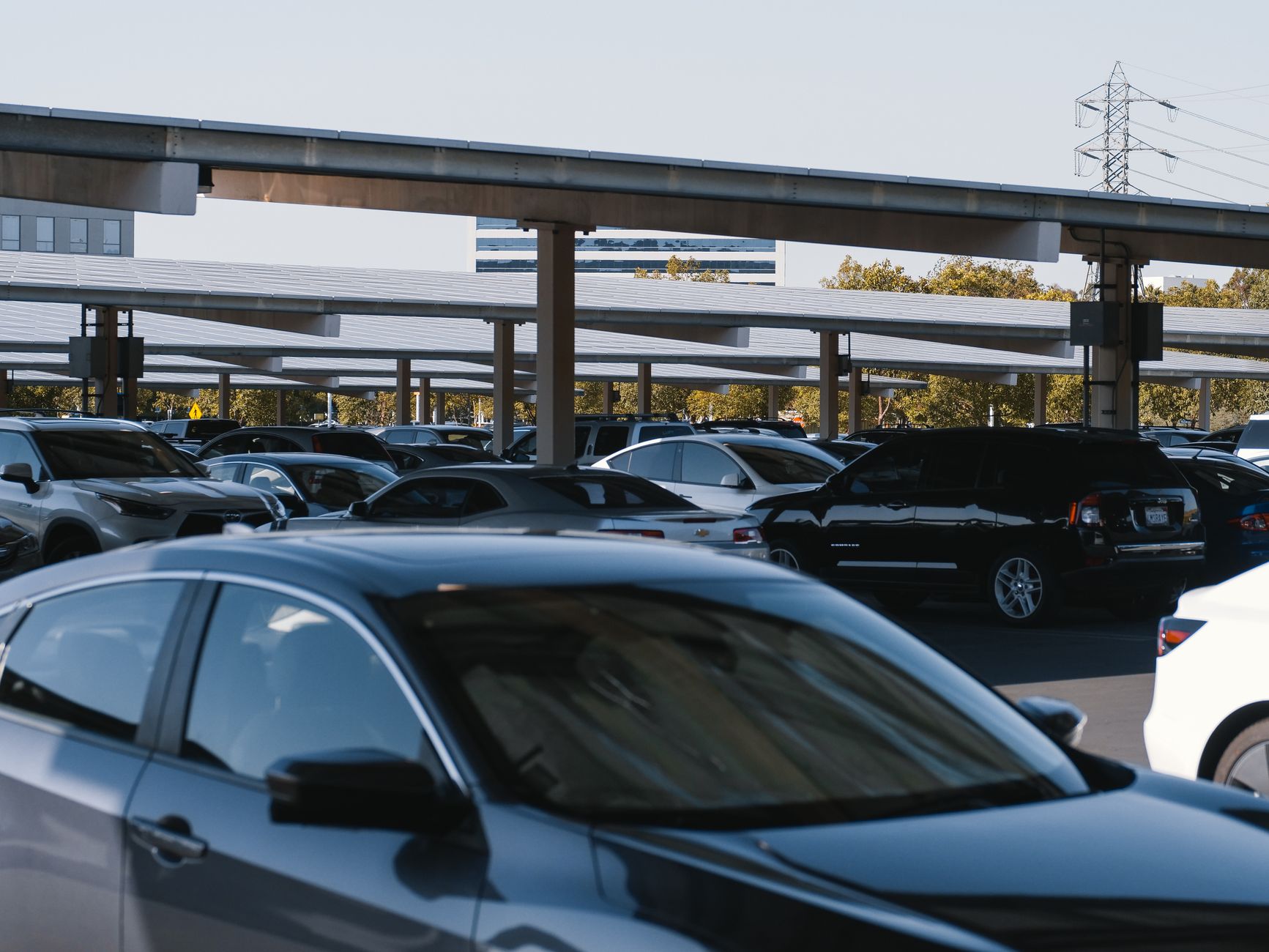
    Photo by Reinaldo Simoes.
  • Do you need a windshield sunshade for your Tesla this summer?

    Do you need a windshield sunshade for your Tesla this summer?

    Model 3 and Model Y both use a large glass roof, and every Tesla has a big, steeply raked windshield. That’s great for visibility and cabin light, but it also means more sun reaches the interior than in a car with a smaller glass area and a traditional headliner — which is the whole case for a windshield sunshade.

    The heat numbers are the main argument. On a hot, sunny day, a parked car’s interior can climb well past 120°F, and a dark dashboard left exposed can reach roughly 156°F within an hour, according to Family Handyman’s testing on car sun shades. A reflective sunshade in the windshield can knock a meaningful amount off that number; aftermarket sunshades sized specifically for Model 3 and Model Y claim cabin temperature drops in the 25–35°F range compared to leaving the glass uncovered, per BASENOR’s product testing for Tesla-fit shades.

    UV protection is the other half of it. Sunshades block up to 99% of UV rays, according to AutoLenders’ overview of sun shade benefits, which matters for a dashboard and seats that otherwise take a direct, daily UV hit. Less heat and UV exposure also means less strain on the cabin’s plastics and any wrapped or leather surfaces over time, and a cooler cabin means your air conditioning doesn’t have to work as hard the moment you get in.

    Fit matters more than it sounds like it would. A generic, one-size shade will leave gaps around a windshield as large and curved as a Tesla’s, letting light in around the edges. Shades cut specifically for Model 3 or Model Y — sold by several Tesla-focused accessory makers — are worth the small premium over a universal shade for that reason. Reflective, foldable versions that store flat in the frunk or under a seat are the most practical choice, since you’ll actually use one you can deploy in a few seconds in a parking lot.

    It’s not a required accessory, and skipping one won’t hurt anything mechanically. But if your Tesla spends summer afternoons parked outside without shade, a $20–$40 windshield sunshade is one of the cheapest ways to keep the cabin cooler on arrival and slow down UV wear on the interior.

    Photo by Kindel Media.

    Photo by Kindel Media.

  • Can you return a new Tesla after delivery? What actually applies now.

    Can you return a new Tesla after delivery? What actually applies now.

    If you’ve heard that you can return a new Tesla within a week if you’re not happy with it, that used to be true — it isn’t anymore. Knowing what actually applies now matters before you accept delivery, not after.

    From 2019 through October 2020, Tesla ran a widely advertised return policy: buy a new car, and if you had fewer than 1,000 miles on it and no damage, you could return it within seven days for a full refund. Tesla quietly discontinued the program and took the dedicated policy page offline, according to Engadget’s reporting at the time. Tesla gave no public explanation for the change. Anyone who wants to return a car today is directed to work through Tesla’s service department on a case-by-case basis rather than through an automatic, guaranteed process.

    Tesla’s own current returns and cancelations page makes the scope clear: it covers Tesla Shop merchandise and accessories — unopened items within 30 days, Wall Connectors and Mobile Connectors within 60 days — not vehicle purchases. There is no published, universal window for returning a delivered car for a refund.

    What you actually sign when you order is a Motor Vehicle Order Agreement, and that document, along with whatever state consumer-protection law applies where you bought the car, is what governs your options once you’ve taken delivery. Those protections vary by state and typically only apply to specific circumstances, like undisclosed defects, not simply changing your mind. This is also different from canceling an order before delivery, which Tesla does allow (with some deposit and fee implications depending on timing) — the return question only comes up after you’ve already accepted the car.

    In practice, that means the pre-delivery inspection matters more than ever. Since there’s no guaranteed return window to fall back on, catching a problem before you sign for the car — panel gaps, paint issues, missing features, anything that doesn’t match your order — is the leverage point that actually exists. If you do want out after delivery, your realistic paths are a trade-in, a private sale, or raising a specific, documented defect with Tesla directly and seeing what they’re willing to do, rather than counting on a formal return policy that no longer exists.

    Photo by Vitaly Gariev.

    Photo by Vitaly Gariev.

  • Why your Tesla’s rated range and your actual range don’t match.

    Why your Tesla’s rated range and your actual range don’t match.

    The range number on your Tesla’s window sticker isn’t a promise about your daily commute — it’s the result of a standardized lab test that every automaker has to run the same way. Understanding how that number is built explains why the miles on your dash rarely match it exactly.

    The EPA doesn’t drive cars on public roads to rate them. Every figure comes from a dynamometer, essentially a treadmill for cars, run in a climate-controlled lab. Automakers combine results from an urban cycle that averages about 21 mph and mimics stop-and-go city driving, and a highway cycle that averages roughly 48 mph, according to GreenCars’ breakdown of the methodology. Those two results are blended (roughly 55% city, 45% highway), then multiplied by a 0.7 adjustment factor meant to account for real-world driving the lab test doesn’t fully capture.

    Tesla, notably, tends to use the EPA’s optional five-cycle test rather than the simpler default. That version adds high-speed driving up to 80 mph, air conditioning use, and cold-temperature operation into the mix, which is part of why Tesla’s rated numbers have historically tracked closer to what owners actually see than some competitors’ ratings do.

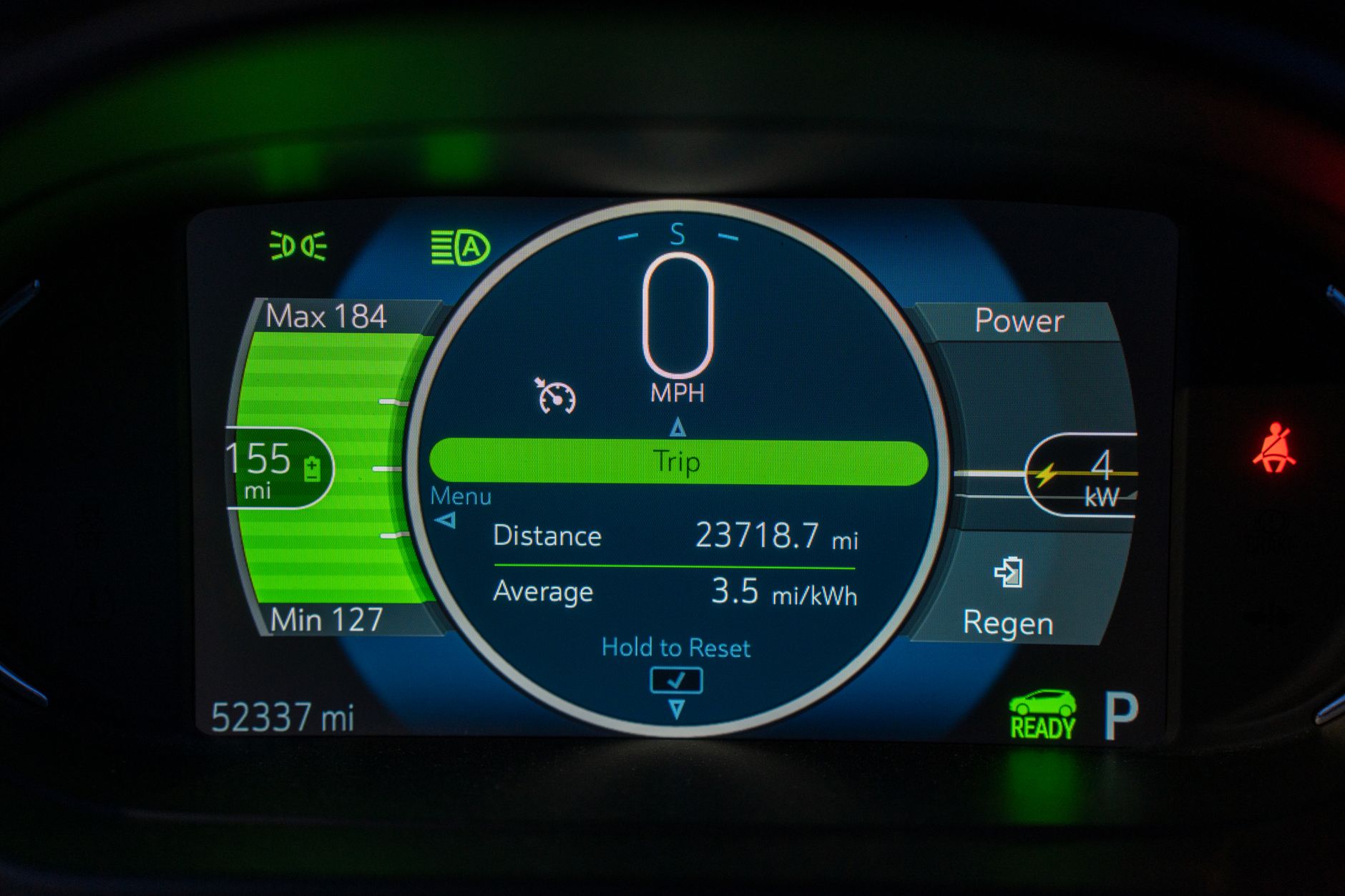
    Even so, a gap is normal. Consumer Reports’ real-world testing has found most EVs deliver somewhere between 85% and 95% of their EPA rating at sustained highway speeds, and broader road-test data shows real-world range running 10–25% below the sticker number in some conditions, particularly at high speed or in extreme temperatures, per Recharged’s guide to EPA range ratings.

    A few things drive that gap in your Tesla specifically. Speed is the biggest one: aerodynamic drag rises sharply above about 65–70 mph, so a fast interstate cruise burns noticeably more energy per mile than city driving, where regenerative braking recovers energy the lab’s stop-and-go cycle rewards. Cold weather hurts range too, both because the battery is less efficient when cold and because cabin heating draws power a gas car gets for free from its engine. Heavy use of air conditioning, steep grades, and a fully loaded car (passengers, cargo, a roof box) all chip away at the total as well.

    None of that means the rated number is wrong — it’s a consistent benchmark for comparing one EV to another, which is exactly what it’s designed for. It’s just not a guarantee for any specific drive. The most useful habit is to treat your Tesla’s own trip planner and real-time consumption display, both of which account for your actual speed, temperature, and driving style, as the number to trust for a specific trip, and treat the EPA rating as the number to trust when comparing cars.

    Photo by Tom Fisk.

    Photo by Tom Fisk.

  • Model 3 vs. Model Y: which one actually fits you.

    Model 3 vs. Model Y: which one actually fits you.

    The Model 3 and Model Y are Tesla’s two best-selling vehicles, and shoppers cross-shop them more than any other pair in the lineup. They share most of the same technology underneath, but the body styles solve different problems. Here is how they compare on space, price, and range as of August 2026.

    The Model Y is a compact sport-utility vehicle (SUV) with a hatchback-style rear door, a taller ride height, and a higher seating position than the Model 3. That layout gives it more usable cargo room: Tesla-focused outlets put the Model Y’s maximum cargo space at 68 cubic feet with the rear seats folded, plus a front trunk. The Model 3 is a sedan that sits lower to the ground, with a traditional trunk instead of a liftgate. It is still practical — about 22.9 cubic feet combined between the trunk and front trunk — but there is less room for bulky items like strollers, large luggage sets, or flat-packed furniture, and no cargo floor that opens straight through to the back seats the way the Model Y’s does.

    Pricing splits the two by roughly $3,000 at the entry level. As of August 2026, the Model 3 starts at $36,990 for the base rear-wheel-drive Standard trim, before Tesla’s separate destination and order fees. The Model Y starts at $39,990 for its base Standard trim, before the same fees. Both figures exclude state or local incentives, since the federal EV tax credit ended for vehicles acquired after September 30, 2025.

    Range is close, with a small edge to the Model 3. The base trim of each carries an identical EPA-estimated 321 miles of range — EPA stands for the Environmental Protection Agency, which certifies range figures for every automaker. Step up to the longer-range trim of each, and the Model 3 reaches up to 363 miles while the Model Y tops out at 357 miles. The Model 3’s lower, lighter sedan body is slightly more efficient, though the real-world difference is modest.

    In practice: buyers who regularly haul kids, gear, or cargo — car seats, strollers, dog crates, big grocery runs, home-improvement supplies — tend to get more everyday use out of the Model Y’s height and hatch. Buyers who mostly drive solo or with one or two passengers, park in tight city spots, or want the lower entry price and the longer range per dollar tend to be better served by the Model 3. Neither is the better car outright. The right one comes down to what actually goes in and out of it week to week.

    Photo by 木 灬.

  • NHTSA suspension investigation: what it means for Model 3 and Model Y owners

    NHTSA suspension investigation: what it means for Model 3 and Model Y owners

    The National Highway Traffic Safety Administration has opened a formal investigation into an estimated 1,198,300 Tesla vehicles after receiving complaints that a front suspension part can break loose while the car is being driven. The probe, opened July 29, 2026, covers 2018-2020 Model 3 sedans and 2021-2023 Model Y SUVs.

    According to NHTSA’s Office of Defects Investigation, the agency has received 156 complaints alleging that the front lower lateral link, a suspension arm that holds the front wheel in place, detaches from the vehicle. When that happens, the car can lose directional control and may not be drivable, requiring a tow. Most owners who filed complaints reported no advance warning, though some described unusual noises beforehand. The vehicle does not display a dashboard warning before the failure occurs.

    This is a preliminary evaluation, the first step in NHTSA’s defect investigation process, as Electrek reported. It does not mean a defect has been confirmed, and there is no recall tied to it yet. If investigators find a safety-related problem, the case can move to a deeper engineering analysis and eventually a formal recall. NHTSA says it is not aware of any crashes, injuries or fatalities connected to the complaints reviewed so far.

    Tesla has recalled vehicles for similar lateral link failures twice before: a 2021 recall covering about 2,800 Model 3 cars tied to a production defect, and a 2023 recall covering 422 Model 3 cars with related failures. NHTSA says the complaints in this new investigation go beyond those earlier recalls and do not appear to stem from the same manufacturing issue. Tesla had not issued a public statement on the new investigation as of the time Insurance Journal and other outlets reported the story, and did not respond to a Reuters request for comment, according to a Reuters report.

    For owners, this is worth knowing about but is not yet a reason to take the car in. An open investigation is not a recall, and no repair or action is required at this stage. Owners of an affected Model 3 or Model Y should pay attention to any new clunking, knocking or popping noises from the front of the car, or changes in how the steering feels, especially over bumps or during turns. Anyone noticing those symptoms should contact a Tesla service center. Owners can also file their own complaint with NHTSA if they experience an issue, and can check for any future recall tied to their vehicle identification number through NHTSA’s recall lookup tool. This is a preliminary evaluation, so it may take months before NHTSA reaches a conclusion; GetTesla.com will follow the investigation and report if it results in a formal recall.

    Photo by I’m Zion.

  • State and utility EV incentives are still out there. Here’s how to find yours.

    State and utility EV incentives are still out there. Here’s how to find yours.

    The federal $7,500 credit is gone, but that does not mean every EV incentive disappeared with it. States and utilities run their own programs, separate from the IRS, and several are still paying out in 2026. The catch: they change often, so what applies to you depends on where you live and what your utility offers.

    The best starting point is the Department of Energy’s Alternative Fuels Data Center, which tracks state and utility EV incentives by location, or the DSIRE database run by NC State, which does the same for energy programs generally. Both are free and updated more often than most articles on the topic, including this one.

    A few concrete examples that are verified active right now:

    Colorado offers an Innovative Motor Vehicle Credit against state income tax for new EVs and plug-in hybrids. For 2026 the base credit dropped to $750, down from $3,500 in prior years, though vehicles with an MSRP under $35,000 can add another $2,500. The vehicle’s MSRP has to be under $80,000 either way. A base Model 3 currently prices above the $35,000 cutoff, so most Tesla buyers in Colorado would see the smaller $750 credit.

    Connecticut’s CHEAPR program pays a standard $1,000 rebate on new battery-electric vehicles with a base MSRP under $50,000, and Tesla is listed as an eligible manufacturer. Buyers who qualify by income can receive up to $4,000 combined through the Rebate+ tier.

    Massachusetts’ MOR-EV program offers a $3,500 rebate on new EVs with a total MSRP of $55,000 or less. That currently covers a rear-wheel-drive Model 3, but the Model Y’s price puts it over the cap, so it does not qualify.

    New Jersey’s Charge Up New Jersey normally pays $1,500 to $4,000 off a new EV at the point of sale, but as of late July 2026 the program says its funding is fully allocated and it is paused to new applications. That is a useful reminder: these are budgeted state programs, not open-ended tax law, and they can run dry mid-year.

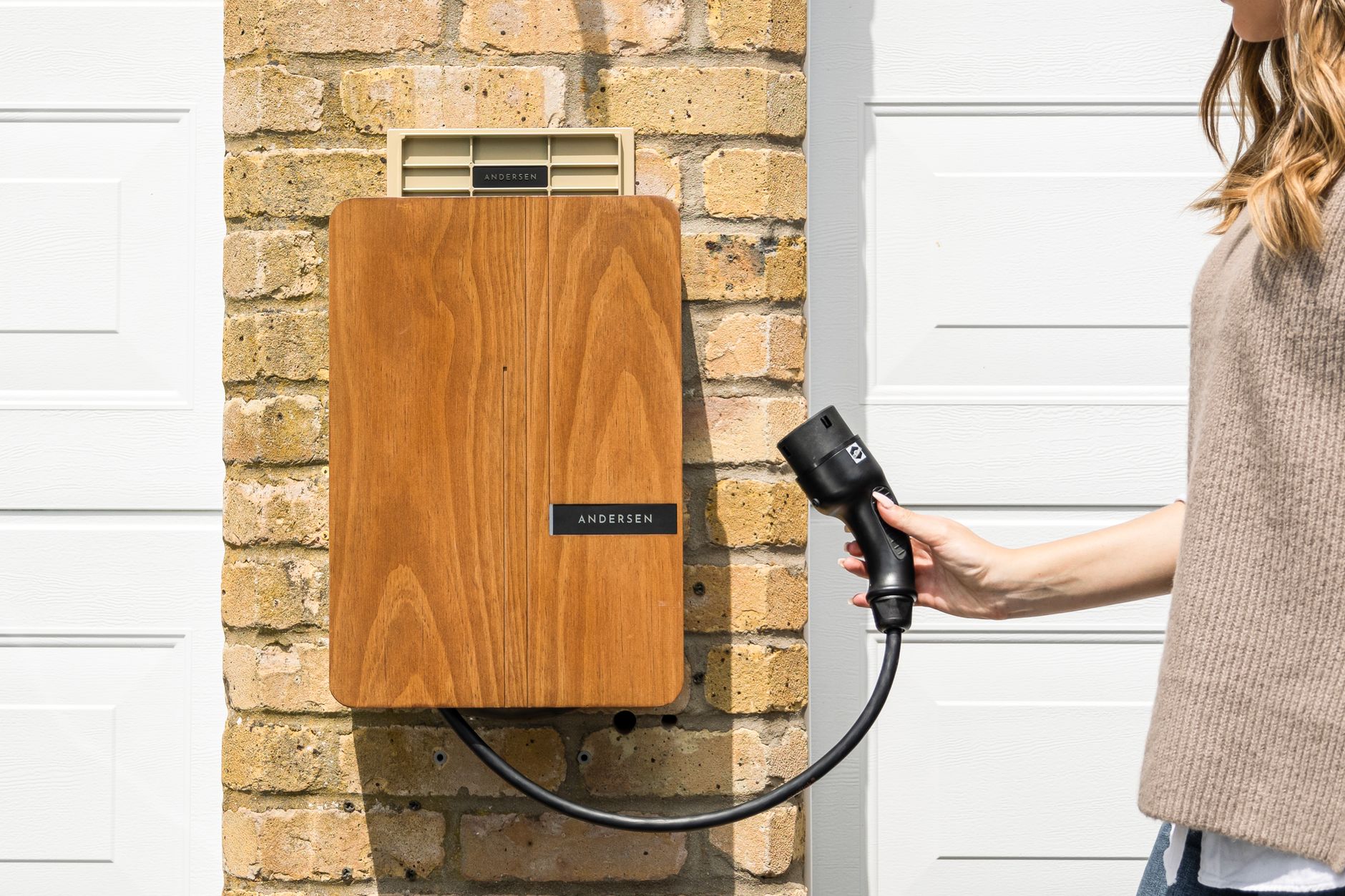
    Utility rebates for home charger installation are a separate track worth checking, since they come from your electric company, not the state. PG&E in California covers up to 50 percent of an approved Level 2 charger’s cost for most customers, and up to $5,000 including a panel upgrade for income-qualified households. Puget Sound Energy in Washington offers up to $300 toward a charger, or up to $600 for the charger plus $2,000 toward installation for income-qualified customers. Amounts and rules vary by utility, so check your provider’s website directly.

    Two perks are worth flagging as no longer available, since older advice still circulates. California’s Clean Air Vehicle decal program, which let solo EV drivers use carpool lanes, ended October 1, 2025, after its federal authorization expired. And the state’s well-known Clean Vehicle Rebate Project has been closed to new standard-income applicants since November 2023.

    Before you buy, check your state energy office and your utility’s EV page directly rather than relying on a dealer’s estimate or an older article. Funding windows open and close throughout the year, and eligibility often hinges on a vehicle’s exact trim and price at the time of purchase.

    Photo by Andersen EV.

  • Cybertruck vs. Model Y: which one is actually for you.

    Cybertruck vs. Model Y: which one is actually for you.

    Tesla sells exactly one truck and one compact SUV, and the price gap between the cheapest version of each is bigger than it looks at first glance. Here’s what actually separates them for a new-owner comparison, not a spec-sheet argument.

    Price. The 2026 Model Y starts at $41,630 for the Standard RWD trim and tops out at $59,630 for the Performance trim, according to Edmunds’ pricing breakdown (prices include Tesla’s destination and order fees). The 2026 Cybertruck starts meaningfully higher: $71,985 for the Dual Motor All-Wheel Drive trim, rising to $81,985 for Premium All-Wheel Drive and $101,985 for the Cyberbeast, per Cars.com. Even the cheapest Cybertruck costs more than the priciest Model Y.

    Range. The two are close. Model Y ranges from 294 miles (Standard AWD) up to 357 miles (Premium RWD) depending on trim, per Edmunds. Cybertruck’s EPA-estimated range holds fairly steady across trims, at 320–325 miles, according to Cars.com.

    Capability. This is where the two vehicles really split. The Cybertruck’s Dual Motor trim tows up to 7,500 pounds, and the Premium and Cyberbeast trims tow up to 11,000 pounds — enough for a mid-size camper or a loaded car trailer. The Model Y tows a maximum of 3,500 pounds, and only with the Tow Package fitted (standard on Performance, a $1,000 option on other trims per Edmunds) — enough for a small utility trailer or a couple of jet skis, not much more. The Cybertruck also has an open 6-foot bed for hauling things you don’t want inside the cabin; the Model Y’s cargo lives in an enclosed trunk, frunk, and fold-flat rear seats instead.

    Practicality. The Model Y is the easier daily vehicle for most new owners. It’s smaller, easier to park, and cheaper to insure and maintain, and it fits in a standard garage spot without hanging over the line. The Cybertruck makes more sense if you actually tow or haul regularly — a boat, a trailer, job-site materials — and are willing to pay a real premium, in both purchase price and everyday parking hassle, for that capability.

    If you’re cross-shopping the two, the honest test is simple: do you have something specific you need to tow or haul on a regular basis? If yes, the Cybertruck’s capability is hard for the Model Y to match. If your answer is “not really, but it’d be nice,” the Model Y covers nearly everyone’s actual daily use at a much lower cost of ownership.

    Photo by Stephen Leonardi.

  • Do you need a car cover for your Tesla?

    Do you need a car cover for your Tesla?

    If your Tesla lives in a garage, you probably don’t need a cover. If it sits outside every day — on a driveway, in an apartment lot, or at a curb — a cover is one of the few accessories that’s about protecting the car itself rather than making it more convenient to own.

    The case for one comes down to sun and debris. Prolonged UV exposure lets ultraviolet rays penetrate a car’s clear coat, weakening it and triggering oxidation that leaves paint faded and chalky over time, according to detailing supplier Chemical Guys. A cover also blocks tree sap, bird droppings, and pollen from sitting on the paint between washes, and keeps light debris off the glass roof most Tesla models use.

    The catch is that not every cover is worth using. A cheap, non-breathable cover can trap heat and moisture against the paint, which is part of why quality matters more than price for this particular accessory. It’s also worth using a Tesla-specific cover rather than a generic one: Tesla’s own Model 3 car cover, for example, uses a three-layer construction — woven polyester outer layers around a breathable thermoplastic polyurethane middle layer — so the fabric sheds water without trapping condensation against the finish. It also includes a charge port opening and ventilated mesh, so you can plug in without removing the whole cover, plus security grommets and a storage bag. Tesla lists it at $195 for the Model 3.

    Third-party covers built for specific Tesla models offer similar features — a zippered or mesh charging port cutout, multi-layer waterproof fabric, and a snug, model-specific fit — often at a lower price than Tesla’s own. Whichever you choose, a custom or semi-custom fit matters more than it does on a generic sedan cover, since a loose, flapping cover can rub against the paint in wind and cause the fine scratches you were trying to avoid in the first place.

    A cover isn’t required maintenance, and skipping one won’t void anything. But if your Tesla parks outside for weeks at a time — especially somewhere hot and sunny, or under trees — a well-made, breathable cover is a reasonable way to protect the paint and interior between drives.

    Photo by Erik Mclean.

  • What to expect at a Tesla test drive, and how to prepare.

    What to expect at a Tesla test drive, and how to prepare.

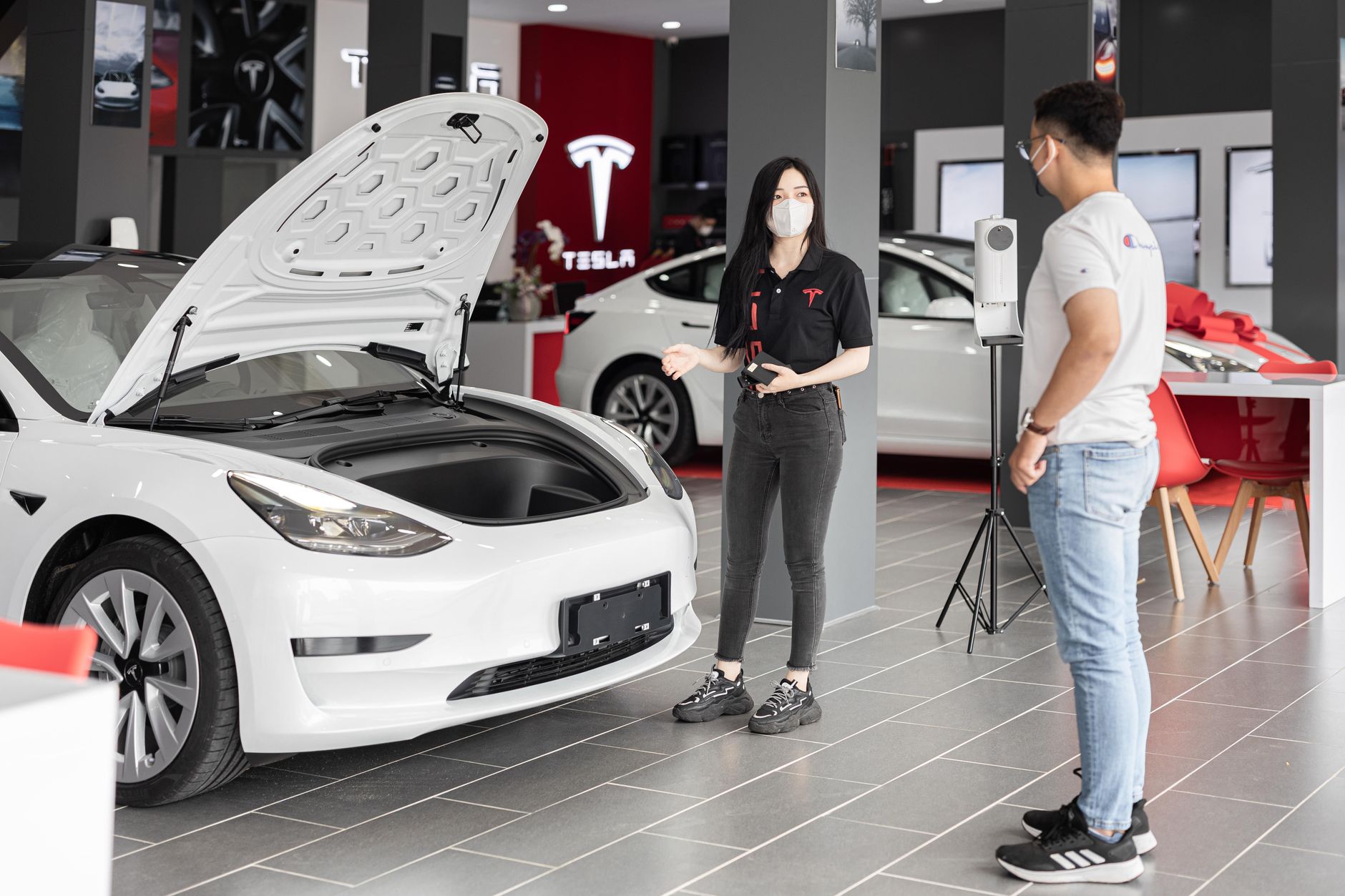
    Before you order a Tesla, you can try one first. Tesla calls this a demo drive, and you can schedule one online at any Tesla store or through the mobile app. Walk-in slots are limited, so booking ahead is worth the extra step.

    After you schedule, a Tesla Advisor typically reaches out before your appointment to confirm the time and answer questions. Tesla’s support page says to arrive about 10 minutes early; when you get there, an Advisor checks you in, verifies your documents, and walks you to the car.

    You’ll need a valid driver’s license. Age requirements vary by vehicle: standard demo drives in a Model 3 or Model Y require you to be at least 18, while a Cybertruck demo drive requires you to be at least 21. Overnight and self-serve demo drives require a minimum age of 21 no matter which vehicle you choose.

    Plan on roughly 30 minutes behind the wheel. Cars used for demo drives come equipped with Full Self-Driving (Supervised), Actually Smart Summon, and Autopark, so you can try those features if you’re curious how they work in practice. Afterward, the Advisor answers questions and can walk you through ordering if you decide to move forward — there’s no obligation either way.

    If you don’t live near a store, you’re not out of luck. Tesla occasionally runs regional demo drive tours, and some locations offer a self-serve option where you experience the car on your own without staff present. Overnight demo drives — letting you keep the car for a full day — are also available at some locations depending on inventory.

    A few things worth doing before you go: bring whoever will actually ride in the car regularly, not just the driver, since backseat space and ride comfort matter to the whole household. If you’re deciding between models, drive more than one on the same trip if the store allows it — the differences in ride height, cargo room, and visibility are easier to judge back-to-back than days apart. And use the 30 minutes deliberately: try a stretch of highway for FSD (Supervised), a parking lot for Autopark, and a rough patch of road to get a feel for the suspension.

    A test drive doesn’t commit you to anything. It’s a free way to confirm the car fits your life before you put down a deposit.

    Photo by AI25.Studio Studio.